

(defi)²
Learning competencies mobilization system, and diffusion for innovation: processes, methodologies and tools
PROJECT DATA
CLIENT: Yuken
INDUSTRY: Innovation
PROJECT: (defi)², Process, methodology and tools for innovation.
LOCATION: Santiago, Chile. Global outreach.
YEAR: 2016 – present.
AREAS OF EXPERTISE: Innovation, Learning, Instructional design, Didactic design, User interface, User experience design, Instructional design, Brand design and identity, Strategic design, Content development, Interaction design, Information architecture, Infographic design, Digital design, Audiovisual design
CHALLENGE
The project’s challenge lies in addressing Chile’s low innovation capacity compared to other countries, and the growing need for detailed and accessible innovation processes and tools for professionals, teachers and students. Originated by low-quality education and limitations in scientific and technological capacity, the project seeks to restructure and disseminate successful innovation processes, beyond the traditional passive manuals. Its objective is to democratize high-performance methodologies, which promote a greater and better development of innovations through didactic tools born from the theoretical framework of learning (usually applied to children) and the world of design.
This challenge is focused on globally democratizing methodologies with a very high level of performance, which promote a greater and better development of innovations.”
PROJECT AUDIENCE
According to the proposed challenge, the types of actors targeted by the project are:
– Teachers of innovation courses
– Students of innovation courses
– Professionals and/or entrepreneurs (including corporate entrepreneurship) who wish to have an innovation tool for the development of their projects.
STATE OF THE ART
1. Theoretical framework
To respond to this challenge it was necessary to understand how people learn, what is understood by autonomy in learning, how people and teams make sense of complex information (with special emphasis on synthesis as a cognitive process to define and solve problems), how failure is managed and exploited as a learning process, and the value of experimentation to learn from failures and develop innovations.
The main lines of research to answer these questions were as follows:
- Models of learning construction and innovation, from the concepts of constructivism and constructionism developed by Jean Piaget and Seymour Papert, respectively.
- Autonomy in learning and development processes
- Sensemaking
- Engineering of skills
- The relevance of experimentation and failure, within the framework of innovation, design and learning.
2. Base process for the installation of innovation skills
Part of the challenge of this project was to “disseminate and provide access to innovation processes and tools that had shown some level of success in a very small circle of people, but which had significant problems and shortcomings from the point of view of design, learning and didactics”.
This premise is based on the fact that previous attempts had already been made to develop a process that would synthesize the findings made by team members with respect to innovation processes and methodologies.
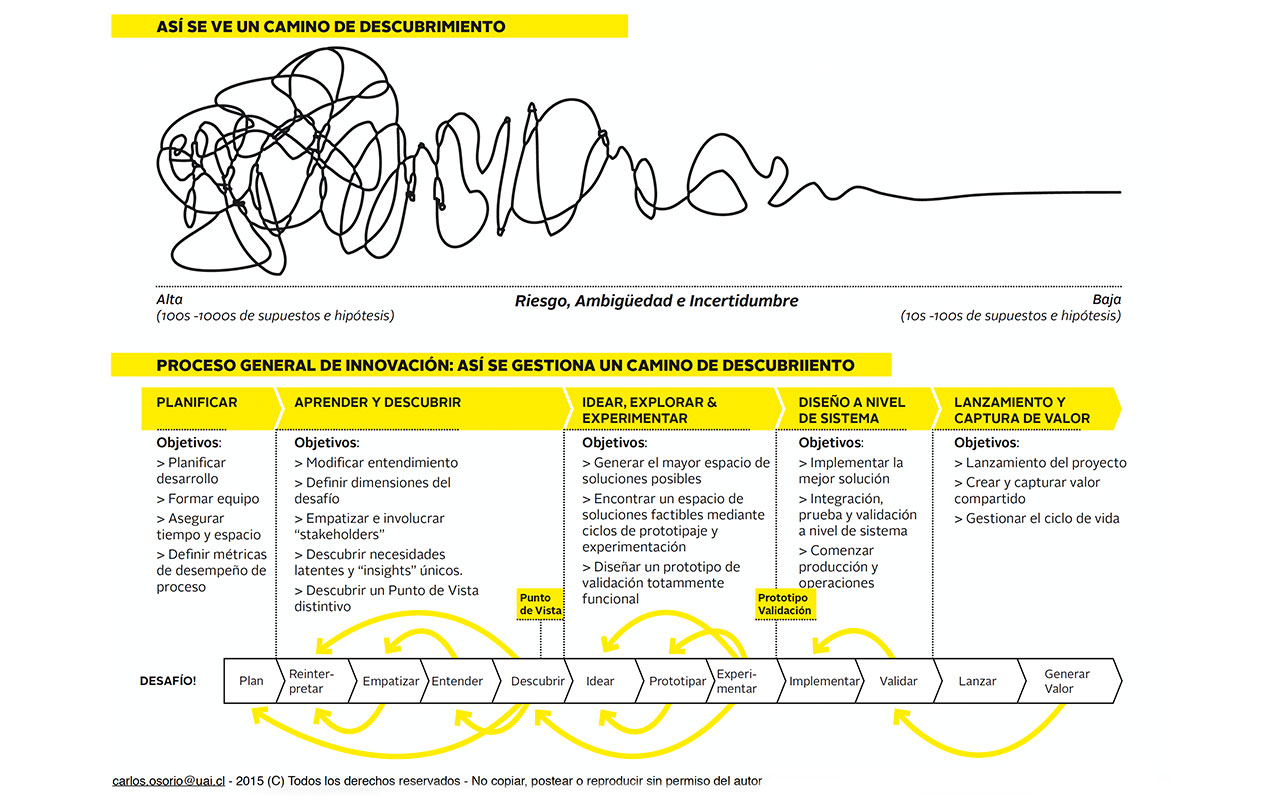
Carlos Osorio, member of Yuken, in parallel to his work as Professor in the Master of Innovation (MI) of the UAI, is part of the first study on innovation processes in Basque Companies (Osorio, 2009), where the synthesis of almost twenty innovation processes is validated (Osorio, 2008), which is starting to be used in undergraduate courses of innovation processes, MBAS and MI. This synthesis is reflected in a first graphic representation of a general innovation process.
Subsequently, the minimum competencies and skills that an innovation team should have, defined as part of the requirements of the UAI Business School, are added to this. An important part of these competencies and skills are based on a working document based on how to break cognitive and action inertia; become independent from the weight of experience and cognitive biases of innovation team members (Osorio 2007b) and the role of risk, ambiguity and uncertainty in the frustration levels of team members. Part of these lessons are synthesized in Osorio (2009b), with indications on how to facilitate innovation courses.
During the development of courses and workshops where this preliminary version of the process is used, problems, weaknesses and possibilities for improvement in content, tools, didactic strategies, mediation and evaluation techniques begin to be identified and documented.
These are the instances that consolidate the need for a refinement of the initial process, which later resulted in the development of the solution.
PROJECT DEVELOPMENT
1. Empathetic research
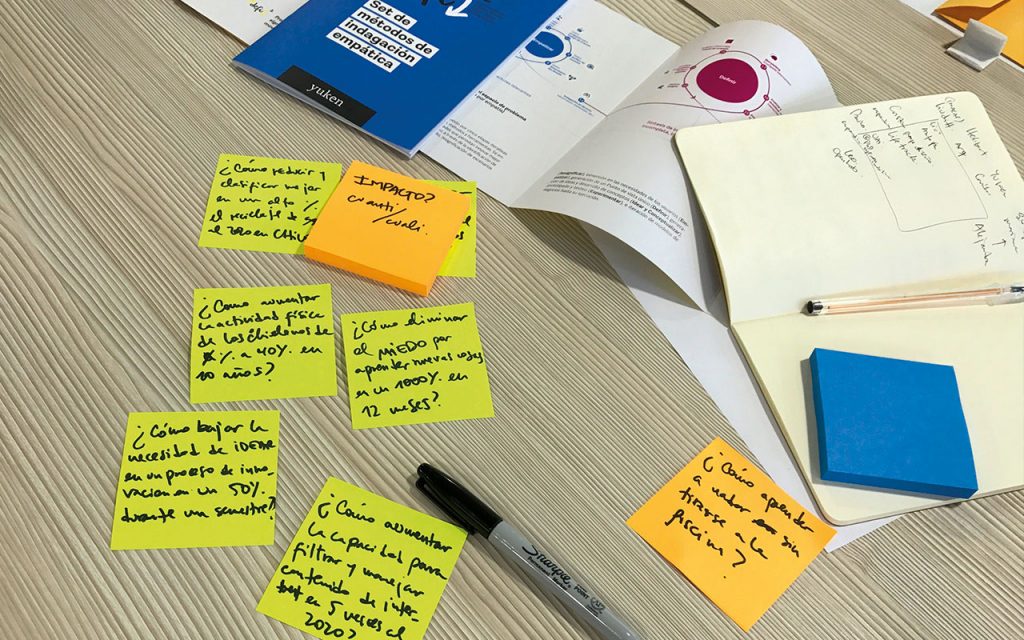
In this first stage of the process, we sought to understand the problem or challenge and empathize with its systemic context (territory, actors and users) through immersive, ethnographic and qualitative research.
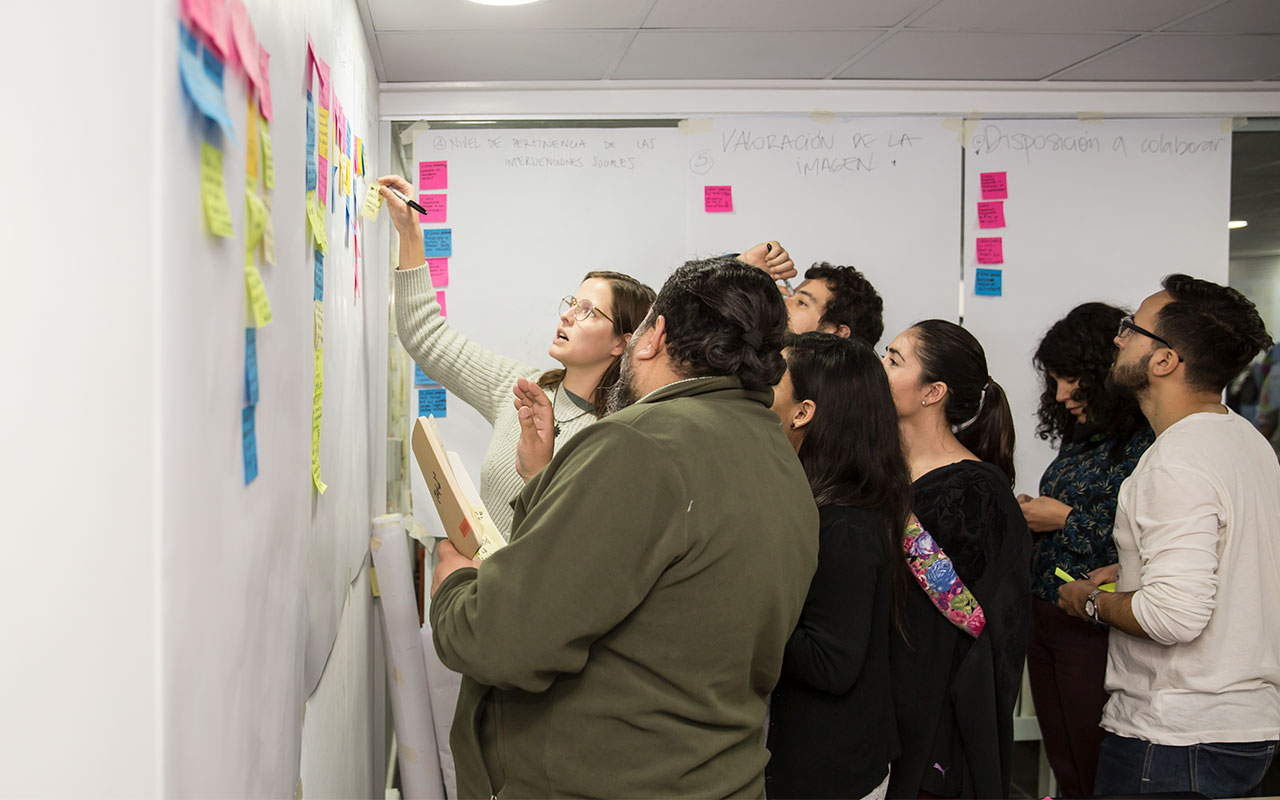
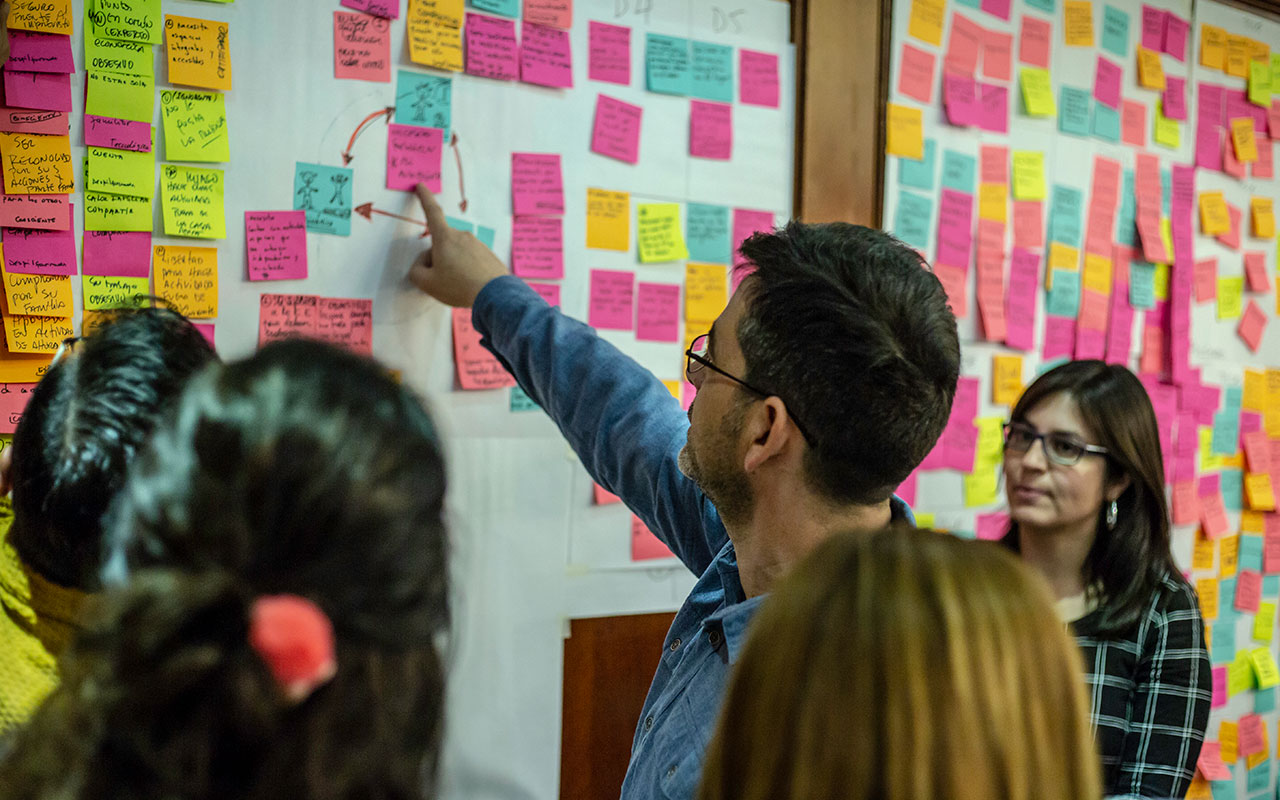
Understanding this process as a user-centered one, it was necessary to investigate the strategic actors involved in the challenge, as well as the different phenomena or dimensions that constituted it. This inquiry began by (i) studying and reviewing all the contents of the basic process for the installation of innovation capabilities and, in parallel (ii) observing in a participatory manner, recording the development of innovation workshops in organizational and academic contexts.
With the 3 types of actors on which the project would focus already identified, the inquiry process continues from a more personal and in-depth level, developing in-depth interviews (through an empathic intervention protocol) and self-reports (through an ambiguity, frustration and acceptance survey and Feedback capture grids).
The main objective of this instance was to identify the most critical needs of the stakeholders, development opportunities and limitations in the context of the challenge that, in their synthesis, they determined:
> From a more explicit and concrete perspective, the moments of the process that presented higher levels of ambiguity and frustration.
> From a more latent perspective, the following dimensions are defined as key for the development of the project; definitions that serve at this stage to observe the problem and, in the proposal development stage, to solve its different design spaces:
– Level of autonomy required for good performance in innovation contexts
– Level of knowledge in innovation
– Level of motivation to learn to innovate
– Level of time available for training
– From the relationship of the actors with these key dimensions, user profiles emerge in terms of their degree of maturity, knowledge and experience in these issues, on the one hand, and the need to apply methodologies, on the other. From this perspective, the heterogeneity of users is high and can be defined from 8 different profiles.
These 8 profiles are present in the 3 aforementioned actors, and are distinguished from each other by the way and quality in which they transit and live the different dimensions of the problem. Continuing with the inquiry process, in 2015 we began to actively experiment in face-to-face workshops, testing the new learning in different profiles, and to collect quantitative data from the participants.
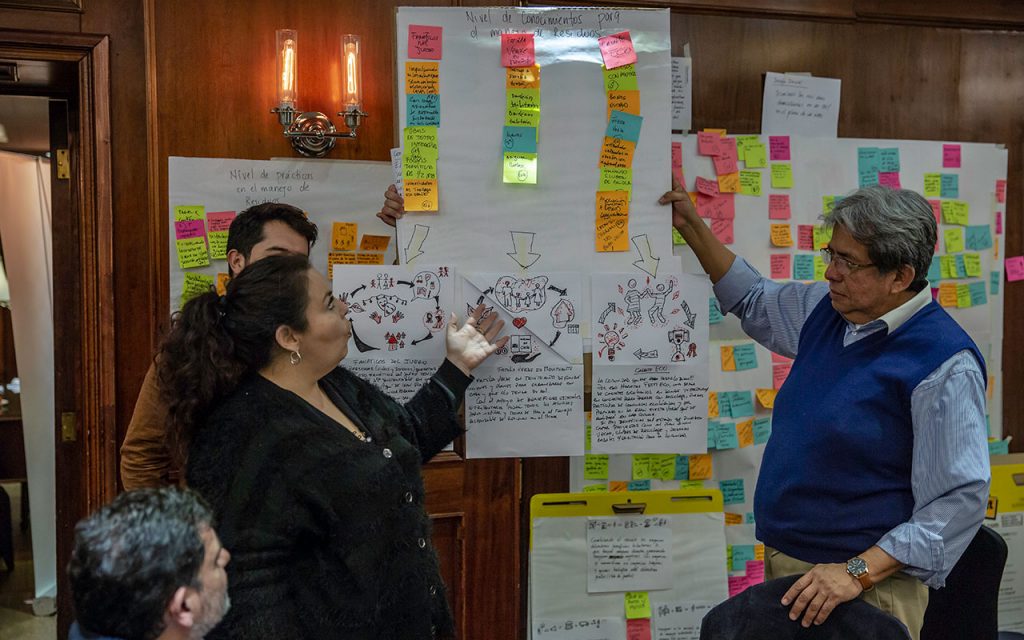
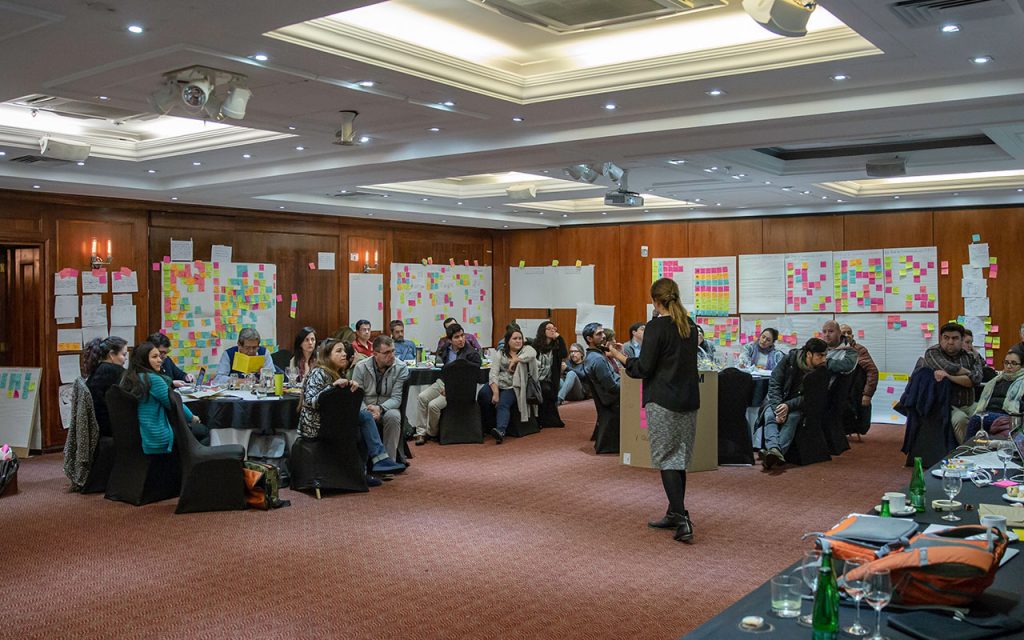
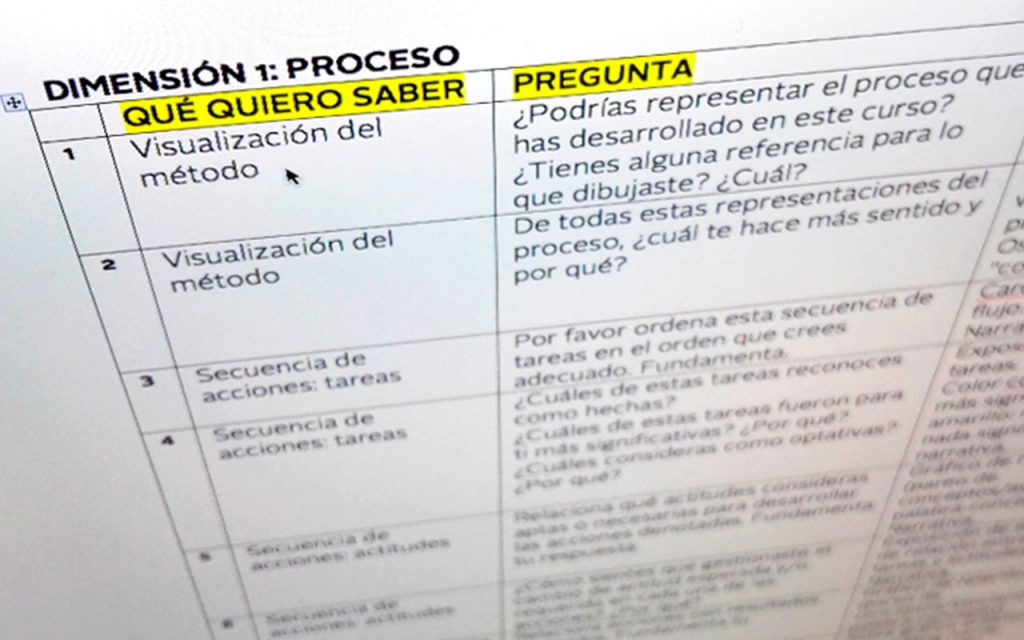
2. Definition and design synthesis for innovation
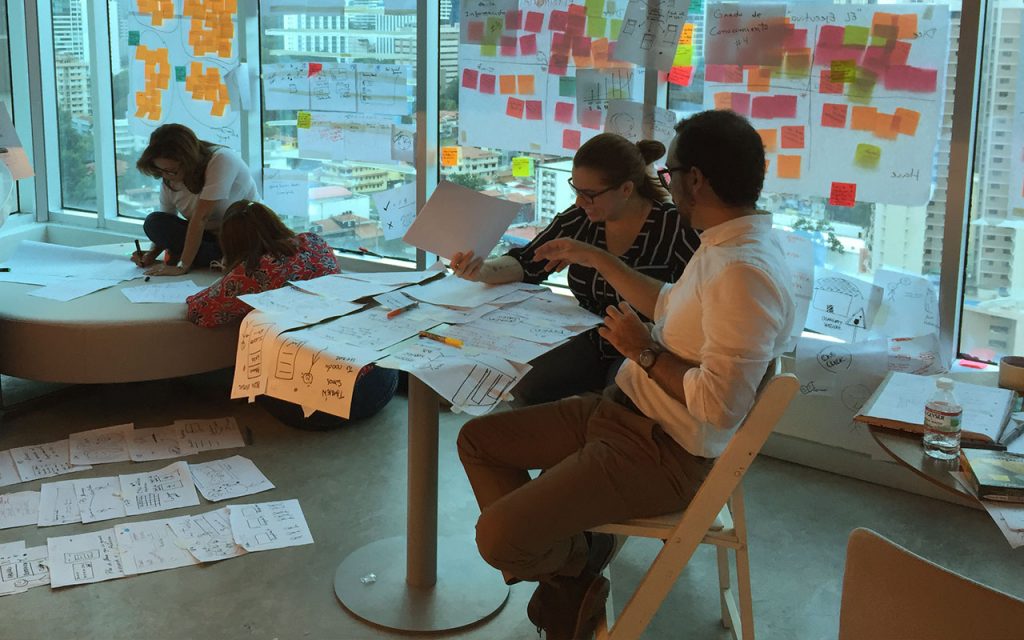
At this point in the project, large amounts of information and data had already been collected from people who corresponded to the defined profiles and, therefore, to the problem and its various dimensions to be understood. These data, arranged in multiple formats —text, quotes, photographs and images, diagrams, among others— needed to be analyzed, organized, understood and, moreover, integrated to make sense of the challenge.
Upon the basis of all the material gathered, the design synthesis process begins, where the latent needs of the various user profiles are articulated with the insights and an understanding of the existing design opportunity is developed.
2.1 Construction of learning in autonomy
The empathy study consolidates the needs of the various users with respect to the tasks that presented the highest levels of ambiguity and frustration in the original innovation process. All those tasks had in common that they were based on one of the most complex cognitive processes to master: synthesis.
When facing new and complex contents, in contexts of high perceived risk, ambiguity and uncertainty (such as those of the innovation process), users need certain strategies (both their own and those of the facilitator) and cognitive tools to apply in the most critical moments of the process, in order to make the integration of new knowledge and procedural activities more fluid.
Part of the essential definitions of this project have been reconstructed from an integrated process that balances the specific needs of face-to-face accompaniment and facilitation, with autonomous moments without guidance or mediation. This translates into (i) transfer strategies that promote a correct procedural understanding, (ii) more and better support from didactic material that supports participants in moments of autonomy, either as reference or instruction, and (iii) group management strategies that promote adaptive leadership -with role rotation- and collaborative sensemaking.
When facing new and complex contents, in contexts of high risk, ambiguity and uncertainty, users need certain strategies (both their own and those of the facilitator) and cognitive tools to apply in the most critical moments of the process, in order to make the integration of new knowledge and procedural activities more fluid."
In concrete terms of application, it is defined that:
– The Meta procedural methodology (which underlies the methodology in innovation) will be Challenge Based Learning. The key is the focus on process over outcome.
– Assessment of learning and performance will be by means of a competency-based rubric.
– It is necessary to develop an intervention matrix (of contents to be transferred), where stages, tasks, attitudes, milestones/expected results, methods, tools and integration levels necessary for the integration of the process in the different users converge.
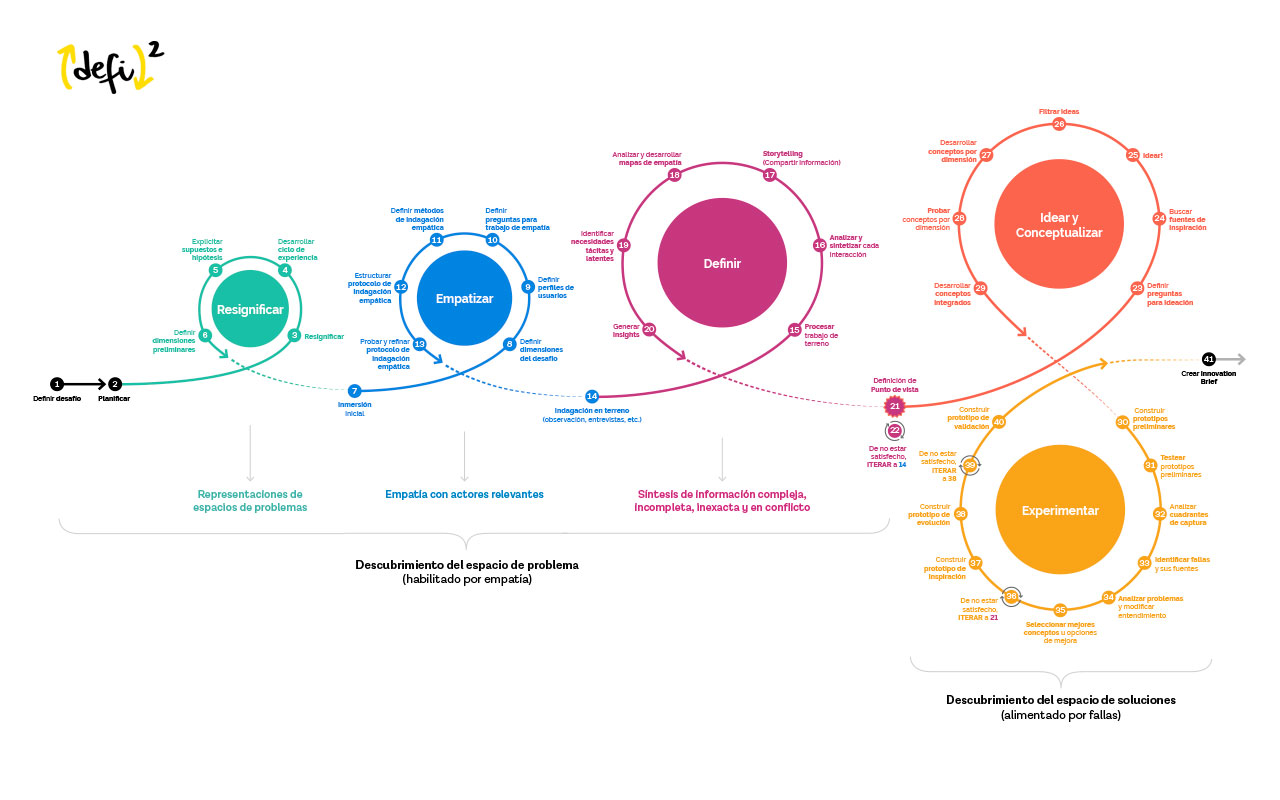
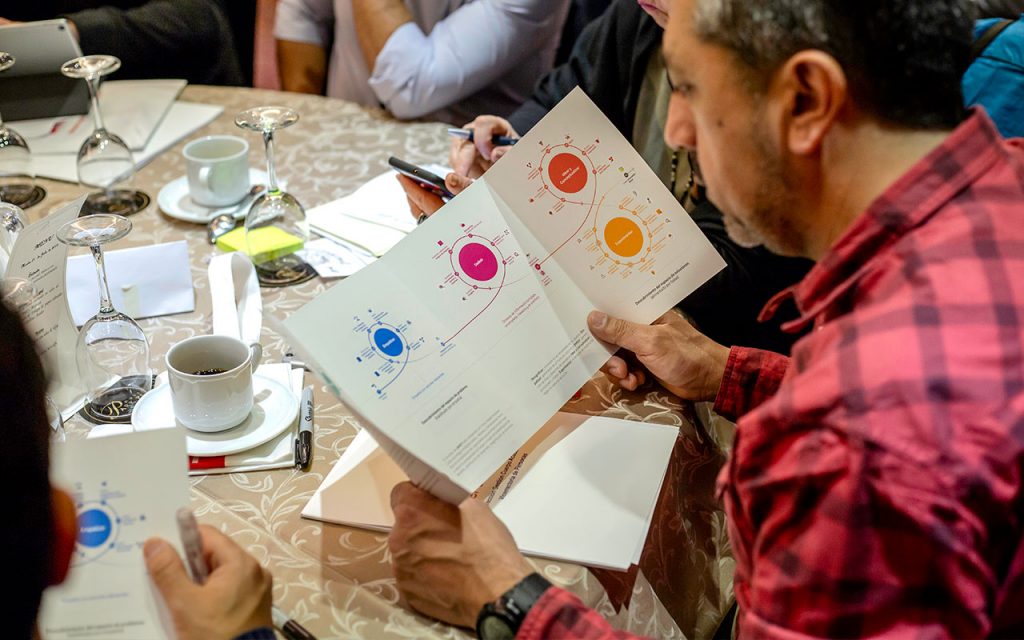
– Regarding the original innovation process, the effectiveness of it (and its previous versions) was tested in domestic and foreign companies, as well as in the training of individuals (undergraduate, graduate, and executive education), and in teams formed by non-professionals. It was identified which stages are the most difficult, and which methods are the easiest to use. These experiments allowed to refine the initial process, so that the visualization of the process (and its methodological system) is redefined, in favor of an effective communication of its fundamental concept: phases with different objectives, sequential but iterative, with a clear structural change promoted by the division of the two meta-phases: Discovery of the problem space and of the solution space.
The final process has 41 tasks that are distributed in 5 stages. In its new version, it is called (defi)², which is the abbreviation of: Discovery Driven, Empathy Enabled, Failure Fueled, Igniting Impact.
2.2 Design Opportunity: Design of online self-learning management experience
It is from the experience and systematic practice of enabling competencies in innovation where the design opportunity emerges, since it is through these that the need to review and refine the original innovation process becomes obvious. Empathic research helps to consolidate the design and innovation opportunity in favor of solving the transfer problem in moments of autonomy through an online self-learning management experience.
This experience was determined around the management of self-learning at 3 different levels of intervention (based on Le Boterf 2000):
Level 1 through doing: first level of competence development focused on the application of tasks as sequences of action.
Level 2 through defining and describing: second level of competence development focused on the evaluation of the tasks performed, description of achievements and failures, in order to then improve the procedural action.
Level 3 through meta-cognition: third level of development of competencies focused on the integration of the motive (what for) of the process and attitudes demanded, in order to generate a higher state of creative reflection, thus being able to replicate in other contexts and/or circumstances. Along with this, it was possible to define the most sensitive points of contact in the experience, in order to provide greater conceptual and theoretical support, as applied in the workshop’s face-to-face model.
3. Proposed solution
For the development of the proposed solution, for each of the various items developed, the following process was followed:
a) Search for graphic and functional references
b) Conceptualization of content
c) Definition of preliminary graphic line
d) Development of prototypes
e) Initial validation with users
f) Selection of graphic line
g) Final development
3.1 Web platform design
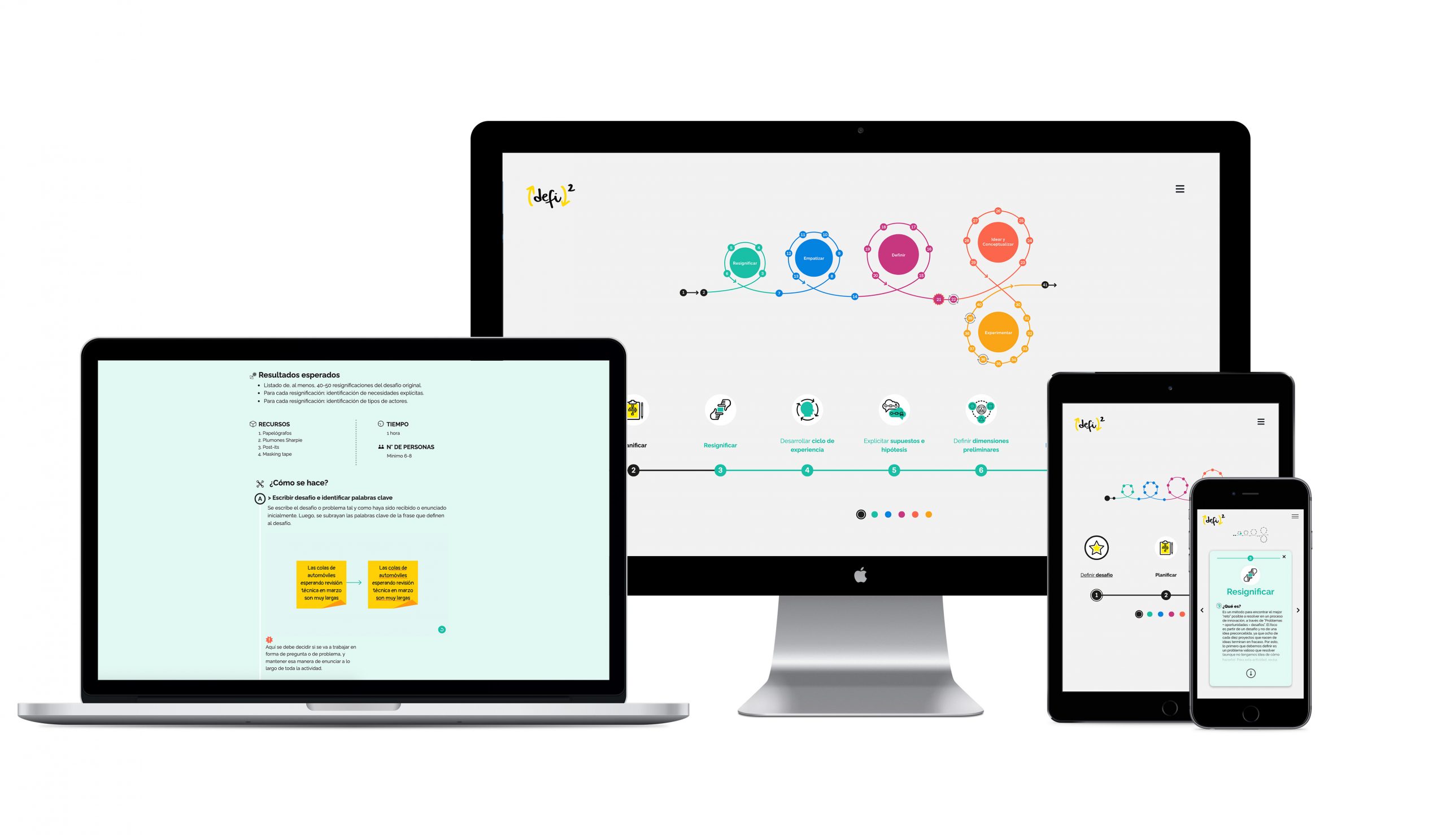
Based on the visual process already defined as a structural element of the platform, the user experience is designed and developed focused on the clear and simple integration of the exposed contents to guide the design of the system towards the best self-learning experience for all the required audiences, based on the rigorous development of its interface and usability (UI and UX). It is a platform that hosts processes, methodologies and tools for innovation. It has 3 levels of information:
- Process: In the first level it is possible to visualize the stages and tasks that constitute the process.
- Tasks: At this level, each task is accessed individually, having access to methodological sheets, infographics and explanatory diagrams.
- References: This third level is focused on deepening the knowledge acquired by performing each of the tasks, by giving access to more information to go more in depth.
3.2 Design of didactic material
The design of each task and complementary tool was also considered in formats that would provide conceptual and procedural support in the self-learning process (from the reception of content to its integration).
3.3 Infographics design
Static and animated infographics were designed as a synthesis of the contents of each stage, presenting the information hierarchically in order to understand more deeply the most complex stages and/or tasks of the process, in order to be able to follow the procedure without guidance.
Since an infographic is more than anything else an interrelation of elements that constitute a message with informative meaning, several variables had to be considered at the time of its development, among them are the typographic definition in order to guarantee a correct and efficient legibility and readability of the written contents —both in support of diagrams and in continuous text—, the chromatic range associated to each phase of the process —fully differentiated—, the iconography that makes sense with each of the tasks, the appropriate format for both mobile and stationary devices, in addition to the printed material and the general layout of the content.
The choice of which tasks needed to have infographics was decided based on empathetic research, in relation to the high level of frustration that certain tasks presented among users.
4. Experimentation and validation: prototyping and testing
Experimentation is a means of determining the validity of hypotheses and assumptions, exploring solution options, and learning by failure about what might not work. It is the main selective search mechanism and, therefore, central to the design process. Therefore, the main objective at this stage was to validate the understanding, recognition and didactic integration of content and functionality of the platform by the users.
The experimentation considered three fundamental activities:
- Planning of the experiments to be carried out.
- Development of real artifacts (prototypes).
- Testing of the results with real people.
Validation testing
The validation tests were performed at different levels, considering different components of the solution: (i) (defi)2 process diagram, (ii) didactic communication, (iii) graphic line, (iv) desktop web interface, and (v) instructional design of complex items.
For each of these instances, both stand-alone and systemic prototypes were developed, gradually increasing in refinement and functionality. In this way, experimentation evolved through preliminary prototypes of low resolution and functionality with low fidelity testing and cost, increasing as alternatives were evaluated until the selection of a solution concept that responded to the problem of each of the dimensions of the challenge, from a systemic perspective. A validation prototype was then generated and high fidelity testing (highest functionality, resolution and systemic integration) was performed.
Between 2015 and 2020, 2,481 participants from 37 workshops in nearly a dozen countries were experimentally tested, allowing for data collection, prototyping and testing of multiple designs in order to launch a validation prototype in mid-2017.
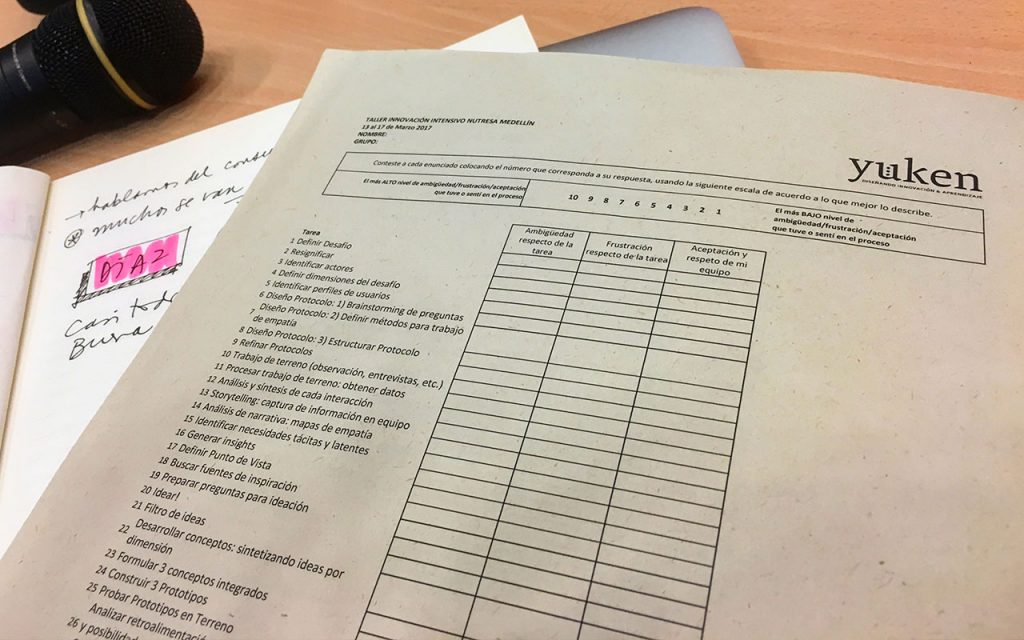
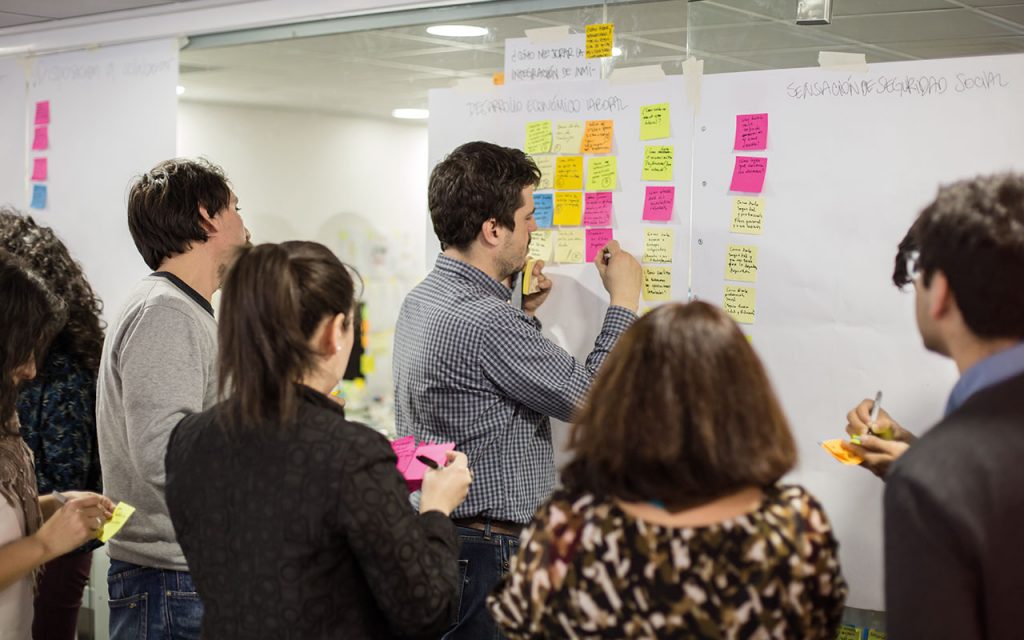
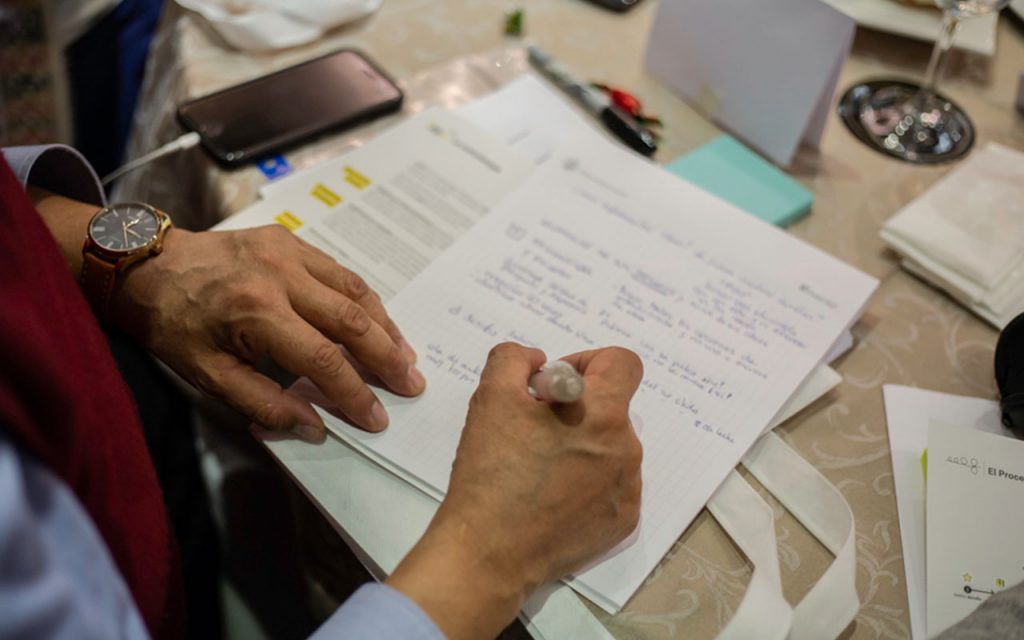
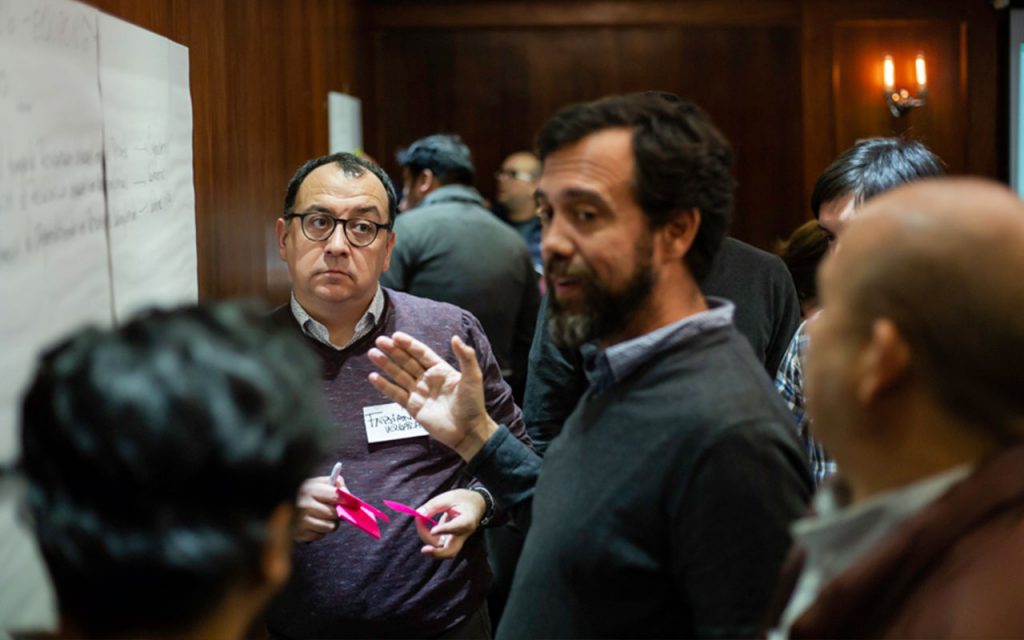
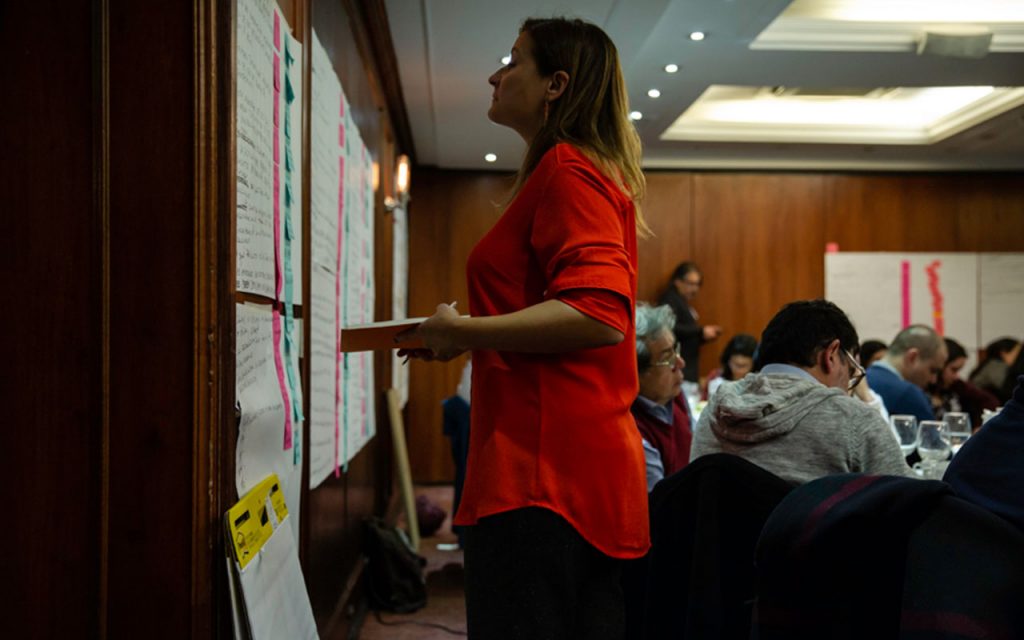
Experimentation is a means of determining the validity of hypotheses and assumptions, exploring solution options, and learning by failure about what might not work.
Through the collection of information in workshops, we began to measure their impact. This data made possible to analyze technical and attitudinal performance in innovation, and the relevance of gender, education, industry, willingness to be creative and tolerate risk, thinking profiles, nationality, model used in the workshop, levels of frustration, ambiguity and, since mid-2017, psychological safety.
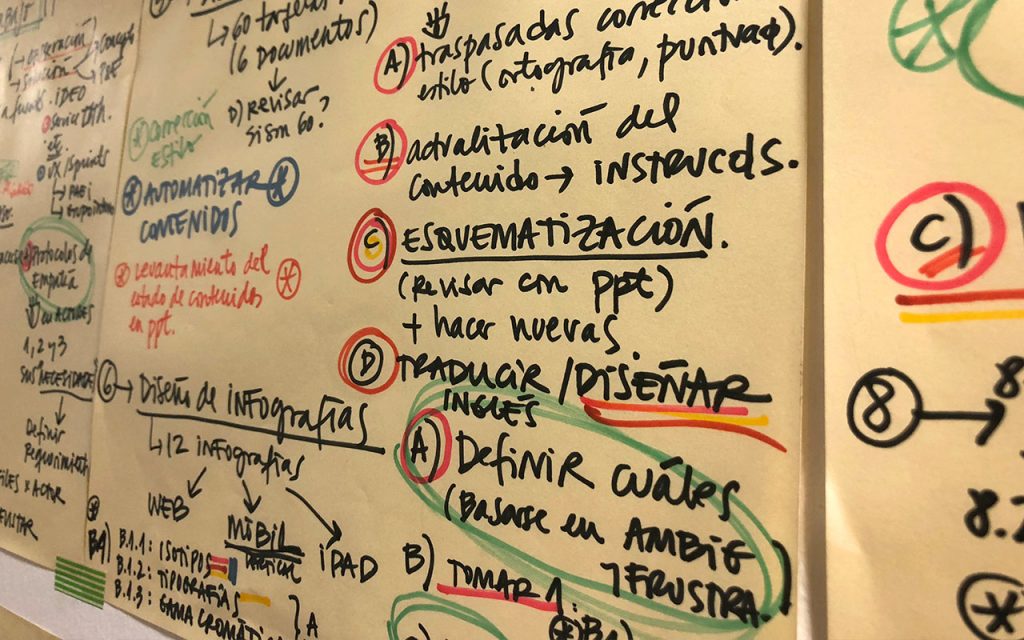
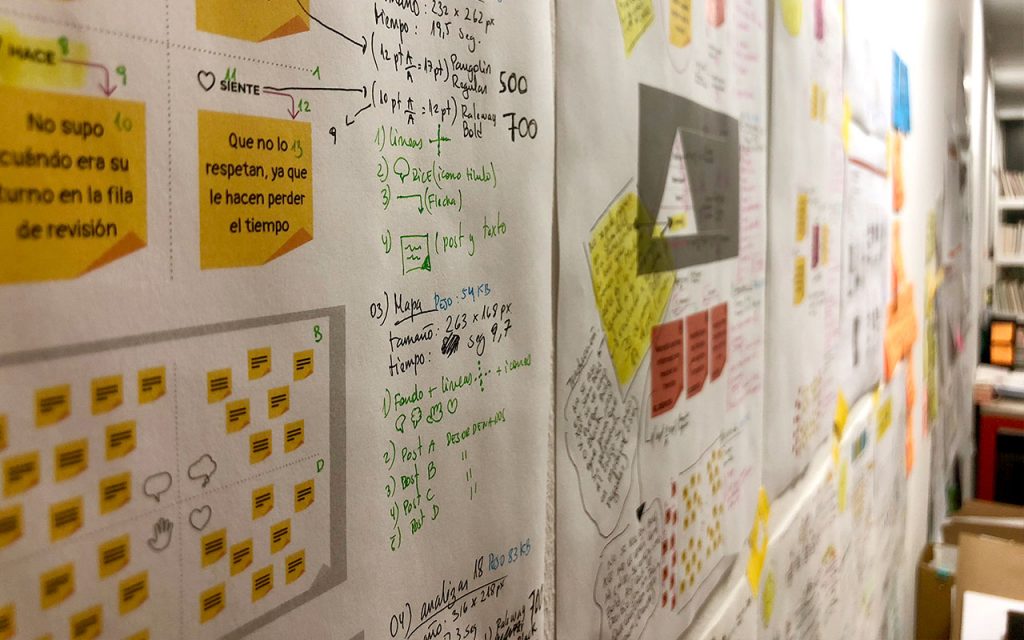
As part of this analysis, changes to the process were defined, mediation techniques and ways of representing it were redesigned, in addition to generating the platform and providing new tools. As these improvements were made, measurements were taken of participants’ frustration levels, in addition to evaluation by competencies.
5. Start-up, launching and massification
This stage overlaps with the previous one (experimentation), given the iterative nature of the innovation process. The implementation started as a beta testing of the user experience design (UI/UX), prior hosting in a high traffic server (to ensure the stability of the platform operation considering the expected demand).
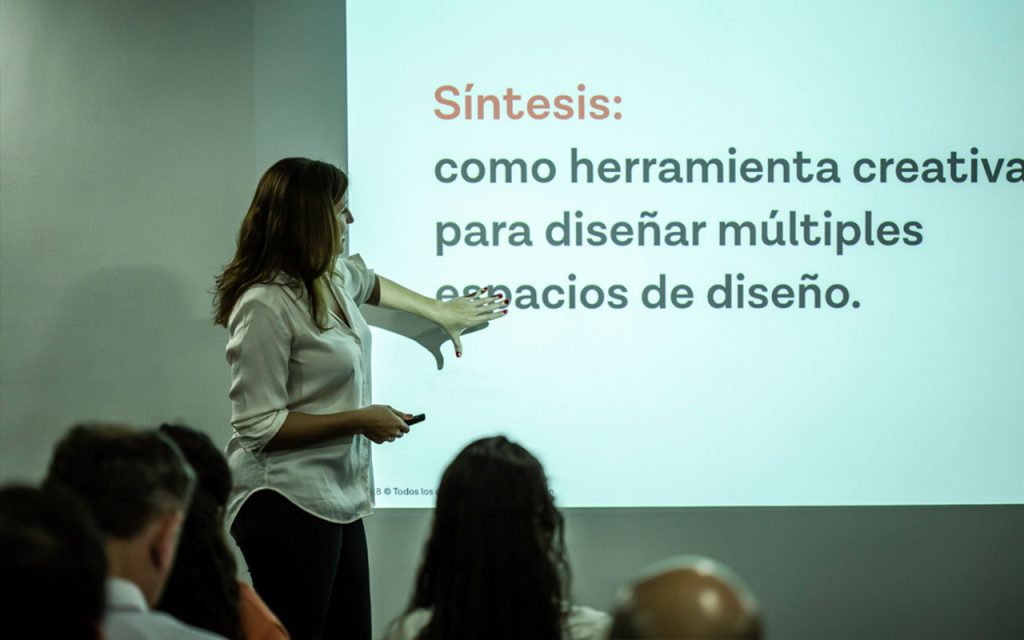
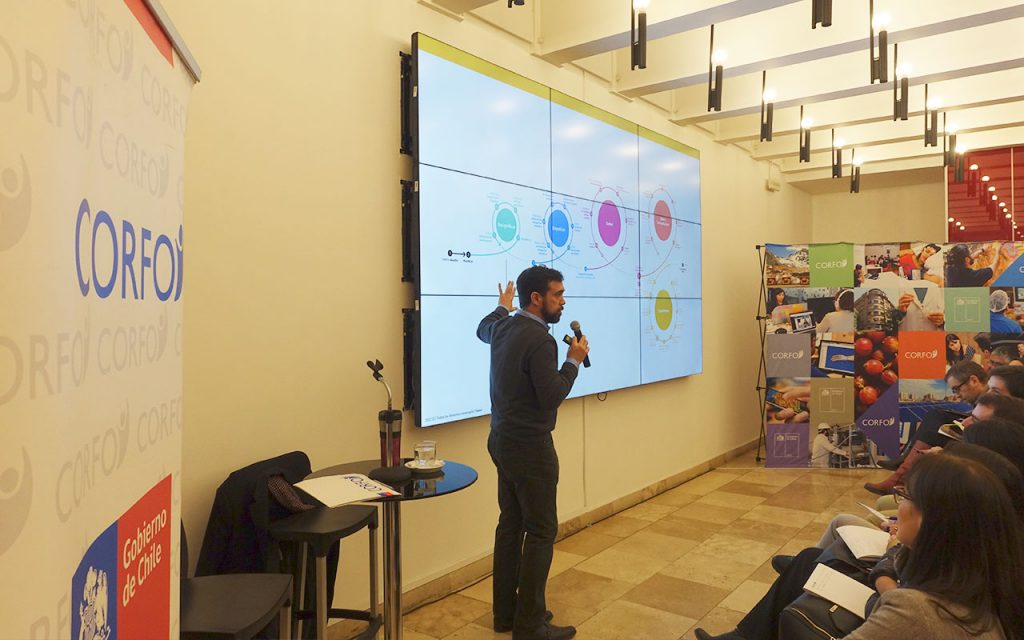
During this stage, the use of the solution has become widespread in Chile and abroad through presentations by the Yuken team, in addition to workshops held at universities and companies.
SOLUTION
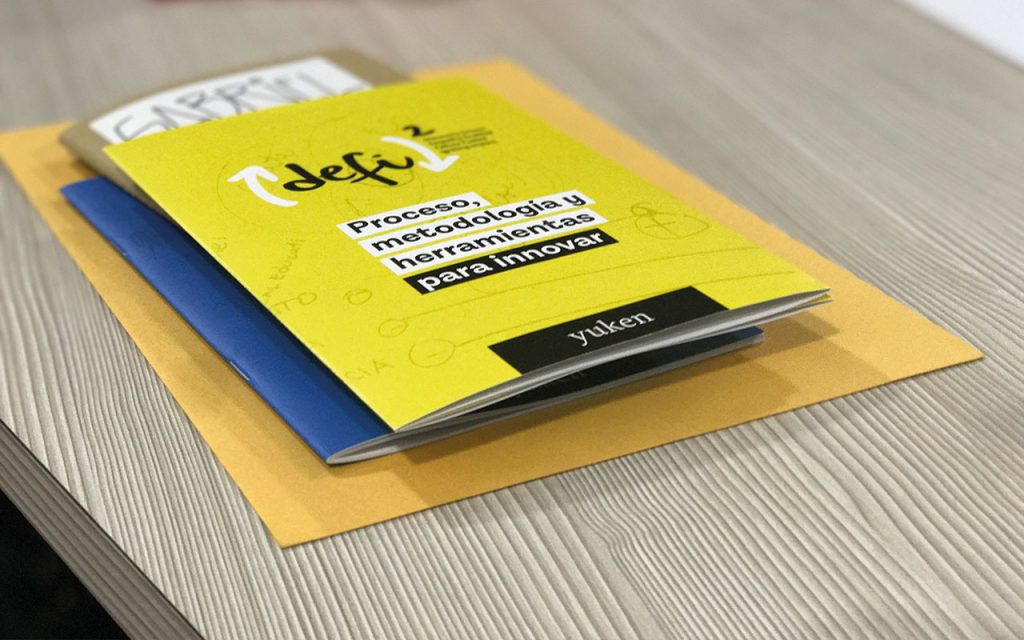
The project culminated in the development of (defi)², a methodology developed to install innovation capabilities and generate innovations in a consistent and predictable manner. This methodology, designed to generate impactful innovation in environments of high risk, ambiguity and uncertainty, is discovery-driven, empathy-enabled and failure-fueled. From an open digital platform, (defi)² is at the service of entrepreneurs, universities and companies, whose focus is to democratize and support the mobilization and development of competencies in innovation, through processes, methodologies and tools that favor the development of innovations and promote the growth of the country.

LEARNINGS
In academic-theoretical areas, the work carried out was based on different dimensions of innovation, such as user-centered design, ideation, experimentation, intellectual property, finance, strategies and business models, to name a few. This synergy makes it possible to put many of these dimensions into practice in a privileged context: global, in contact with real problems, with a large number of people, and experimenting throughout different phases of development.
In addition, a meta-understanding of innovation processes was generated, which was accompanied by the development of a design solution to help better solve an innovation problem: How to better enable learning in innovation?
In practical-organizational settings, it has been possible to establish that the development of the (defi)2 platform is positively related to a better experience of learning to innovate, when controlling for the simultaneous effect of personal characteristics, professional training, gender, among other variables. In public policy areas, the results can help to better inform the design of innovation policies, especially in terms of efficiency in the expenditure of fiscal resources; it is not the same to invest in the generation of innovation capabilities with any methodology.
IMPACT
Our (defi)² method was awarded by the Wharton School of the University of Pennsylvania as the best in the world for installing innovation capabilities, and our clients have become leaders in innovation in their respective countries and industries.
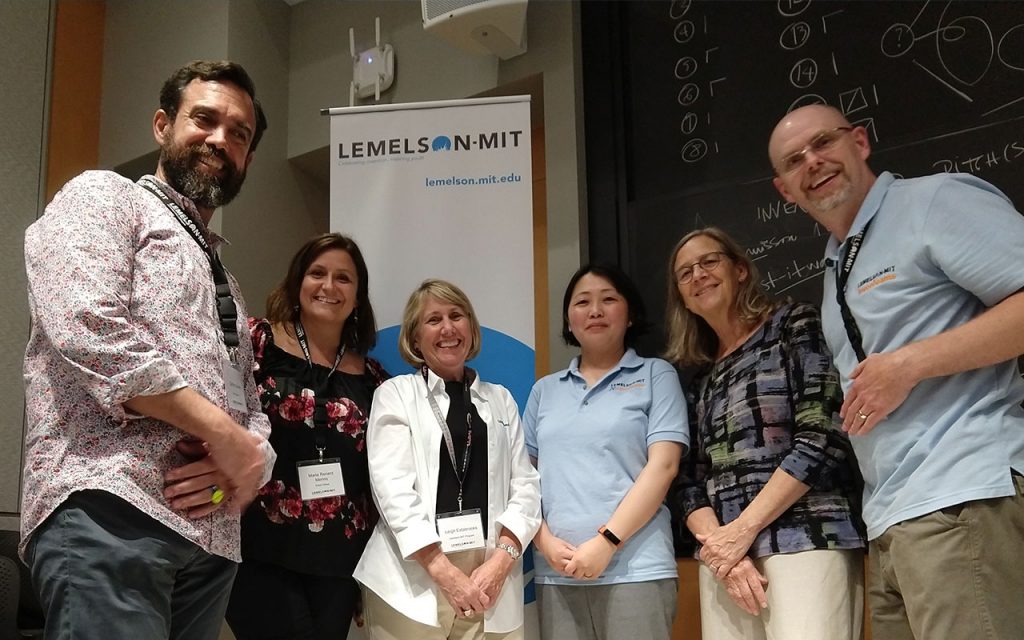
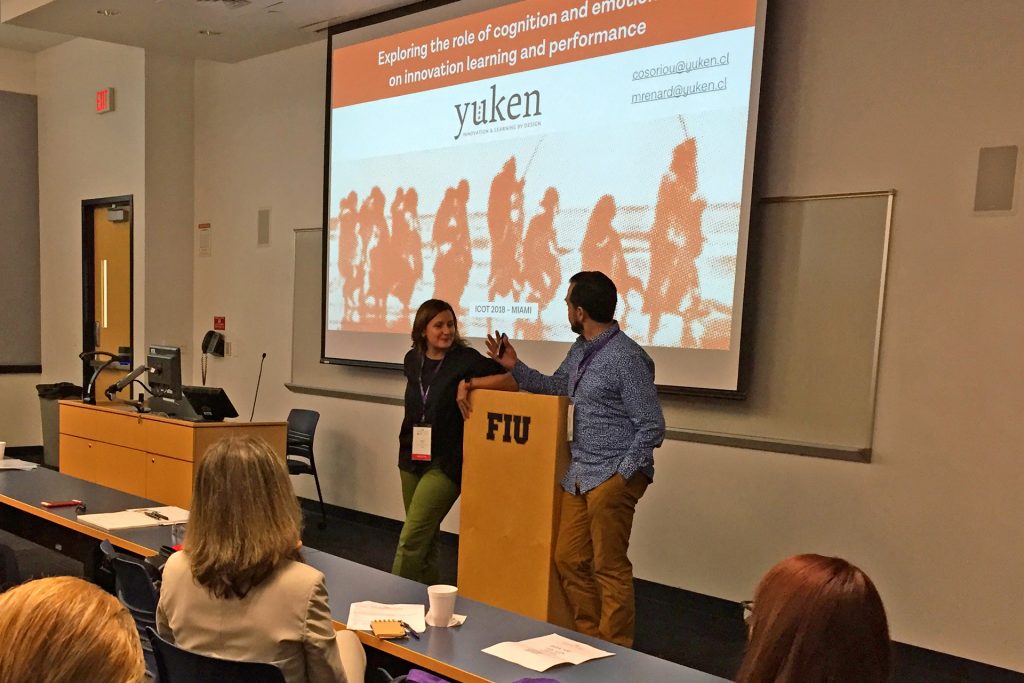
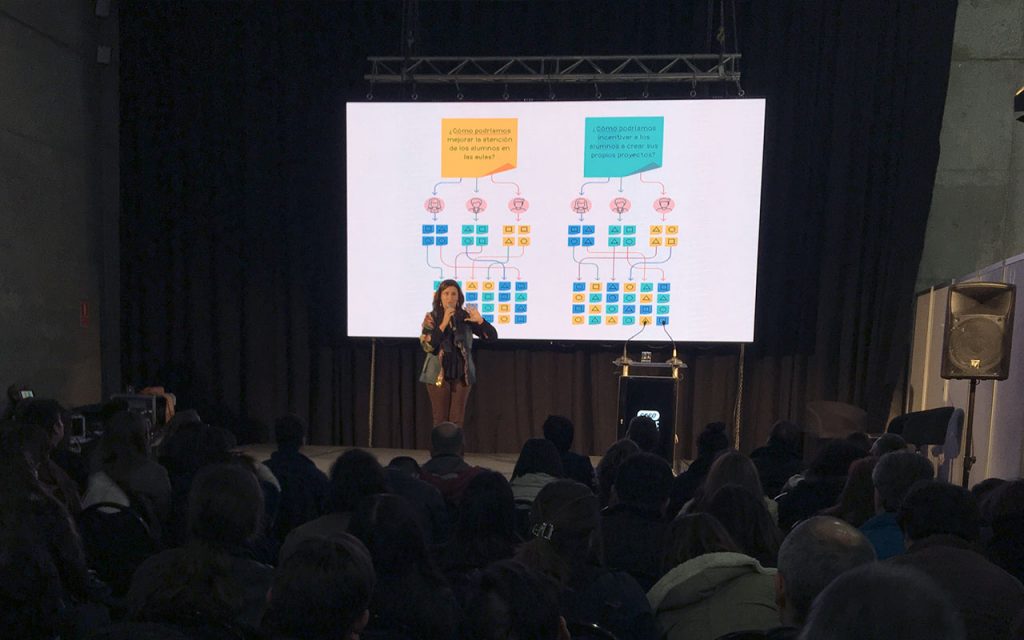
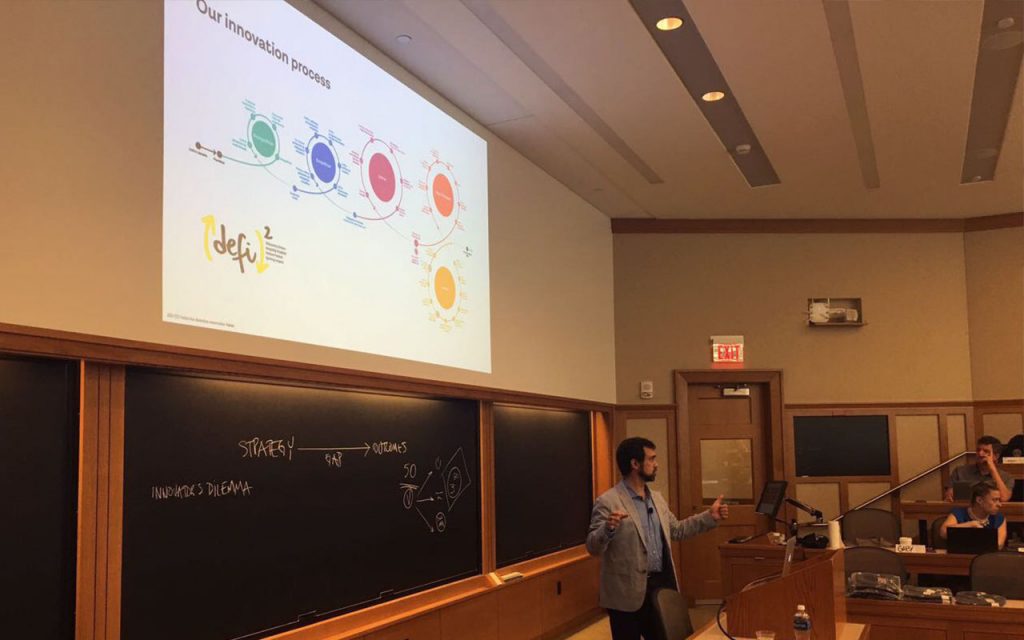
Our team has lectured about (defi)² at MIT, Harvard, The Wharton School, Singularity University, Deusto Business School, Amsterdam Business School, The Academy of Management, the American Education Research Association, Google.
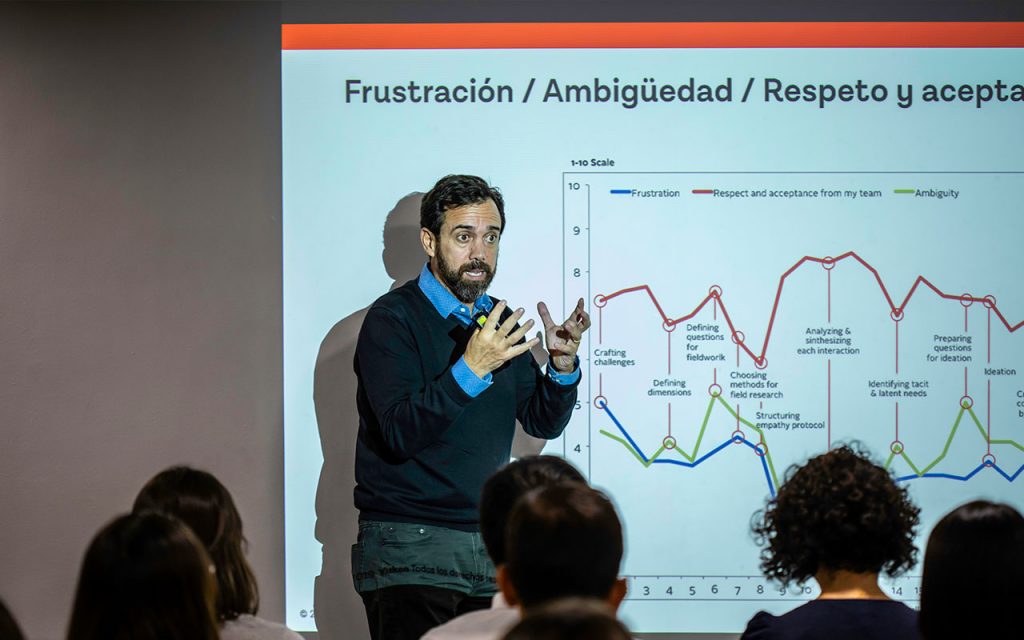
The collected data have allowed us to perform an econometric analysis of the impact of the solution on frustration. This analysis shows that, controlling for the effect of gender, personal characteristics, professional training, mediation styles and levels of psychological security, the availability of (defi)² is associated with a statistically significant decrease in average frustration when performing innovation tasks (with a probability of 99%).

