FIBRALAB, TEACHING EXPERIENCE
Designing meaningful and binding educational experiences with the community
PROJECT DATA
CLIENT: CMPC
INDUSTRY: Forest
PROJECT: FibraLab, CMPC educational experience
LOCATION: Los Angeles, Biobío Region—Chile
YEAR: 2020
TEAM: Yuken (conceptual, strategic and didactic design, graphic line development), N.O.T and Tipo (infrastructure and furniture development), Mezcla (technical development of interactives and videogames).
AREAS OF EXPERTISE: Design and brand identity, Strategic design, Experience design, Content development, Space design, Furniture design, User interface, Interaction design, Didactic design, Instructional design, Information architecture, Design Infographic, Digital design (web and app), Audiovisual design, Wayfinding, Museography
CHALLENGE
FibraLab arose from the need to use CMPC’s new corporate building in Los Angeles as a point of connection with the community to share its vision for the future of the forestry industry. The challenge was to transform these facilities, originally intended for offices and laboratories, into a space that would connect with the community to close knowledge gaps about the forestry industry and highlight CMPC’s role in it.
PROJECT AUDIENCE
Mainly children and young people from 1st grade to 4th grade and their teachers. Secondarily, the neighboring community and visitors related to the forestry industry.
PROJECT DEVELOPMENT
1. Immersive research
This first stage of research focused on the study and review of the contents related to the forestry industry, and on the participatory observation of the strategic actors present in the future experience. Thanks to this research, the most critical needs, development opportunities and limitations in the context of the challenge were identified.
This is custom heading element
From a more latent perspective, key dimensions for the development of the project are defined as the level of:
– Knowledge in the forest industry
– Autonomy for the performance of the didactic experience
– Motivation to learn these topics
– Time availability to attend the didactic experience
– Performance in technological supports
Thanks to the research we were able to define diverse profiles that fall into a greater or lesser range within the dimensions mentioned above, where we can find children or young people with a great deal of motivation to learn the themes of the experience, versus others who have zero interest or even rejection of these themes; or people who have a high command of technological supports, as well as others whose command is minimal, and likewise with the other dimensions.

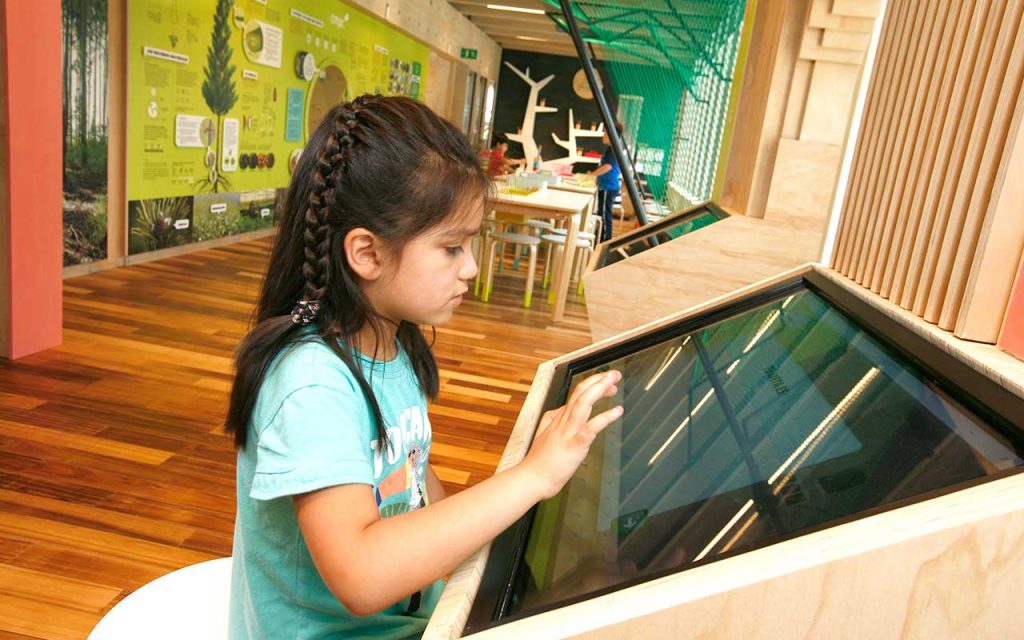
2. Definition of Design and Innovation opportunities:
Based on the synthesis of the needs discovered into design opportunities, the generation of a comprehensive solution for the building’s visitor experience was proposed. This solution was based on the following principles:
- The user experience should be about connecting, empathizing and tuning people into CMPC and its legacy of innovation in the forest industry.
- Go beyond functionality, where utility and enjoyment of use are integrated, resulting in an experience that is memorable, intuitive, didactic and attractive to interact with.
- To favor a truly integrative learning experience without jeopardizing the autonomous development of the participant in the process. To this end, consider a balance between the specific needs of face-to-face accompaniment and facilitation, with autonomous moments without guidance or mediation.
- The experience must be articulated around the management of self-learning at 3 different levels of intervention (i) from doing (concrete and digital activities, where the user connects directly with the content); (ii) from defining and describing (spaces for reflection and analysis, didactic mediums with concrete questions that invite reflection) and (iii) from meta-cognition (conceptual and theoretical support at the most sensitive points of contact in the experience, together with didactic mediums that extend the experience for subsequent personal analysis).

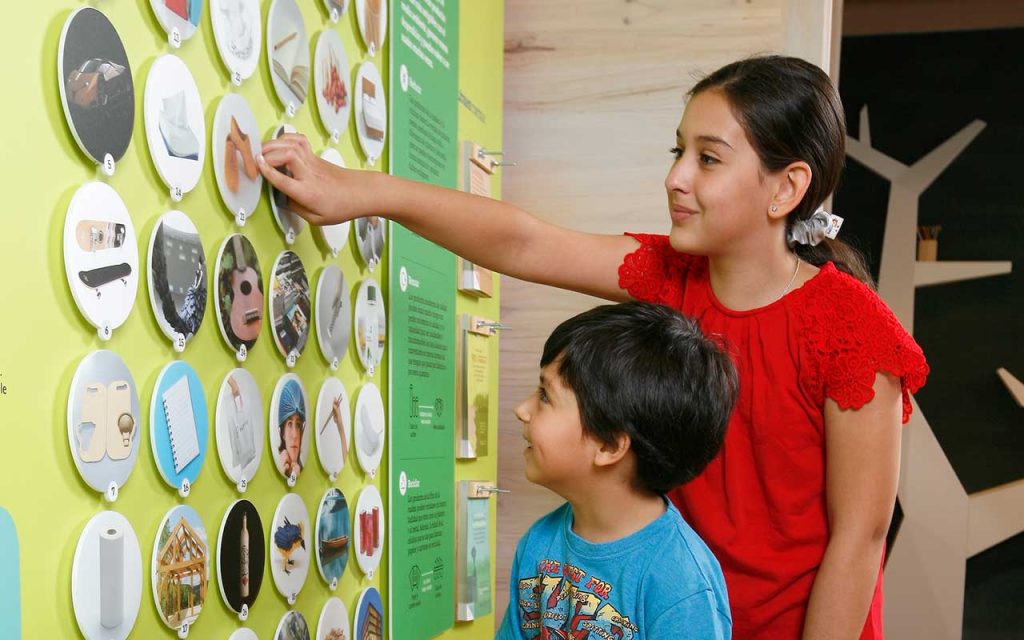
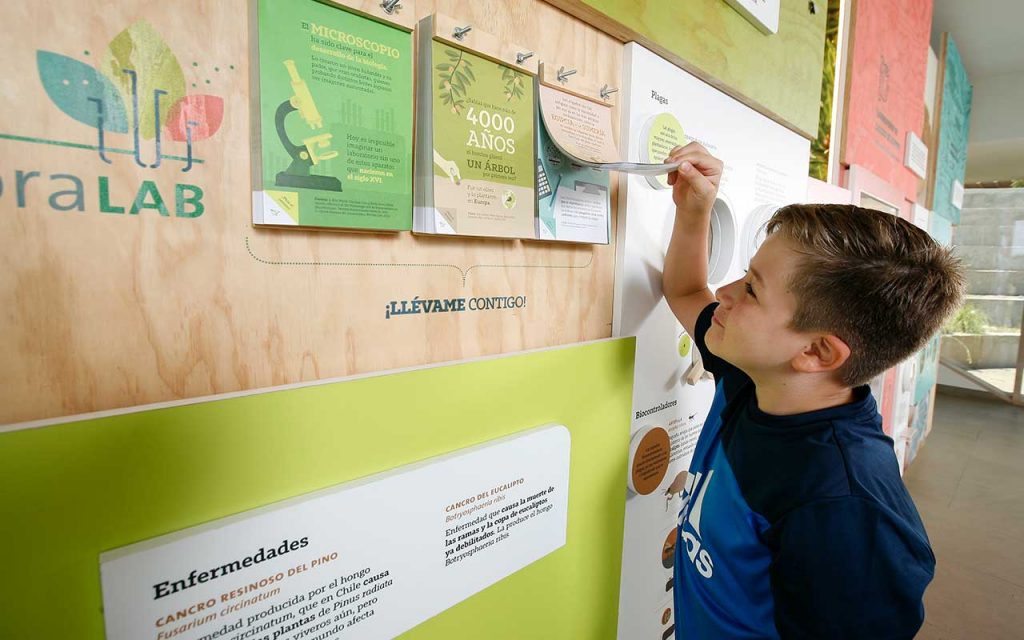
3. Solution Proposal:
Taking “Transformation” as the central concept, the story that guides the didactic experience was developed around three guidelines:
a) Resources (raw material).
b) Processes (raw material transformation processes).
c) Solutions (evolution and potential of wood fiber).
This included the generationdevelopment and content editing related to each topic. To flesh out the content, a system of concrete and digital supports was developed, with an emphasis on defining the ideal mediums for transmitting and/or interacting with the different types of content.
In order for each piece and support to fit the system, it was essential to design the graphic line of the project. This included the definition of style and layout/composition; the definition of formats by typology, materials and layout in space; development of brand image, iconography, chromatic range and associated production processes; and the definition of typographic families suitable for the didactic experience with reading orders that would allow a functional use by future users.
4. Experimentation, prototyping and tests
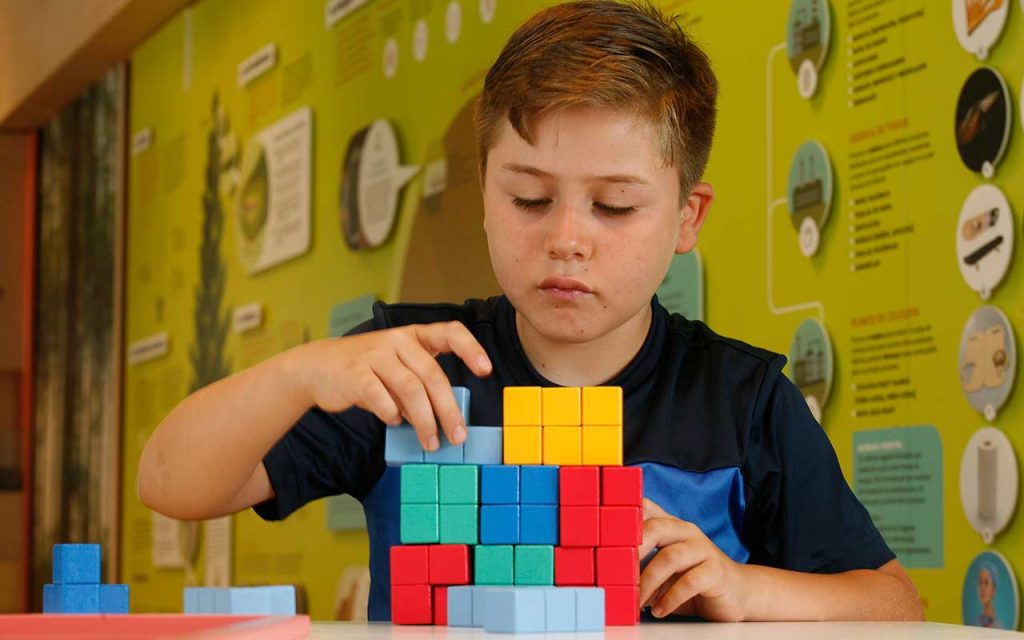
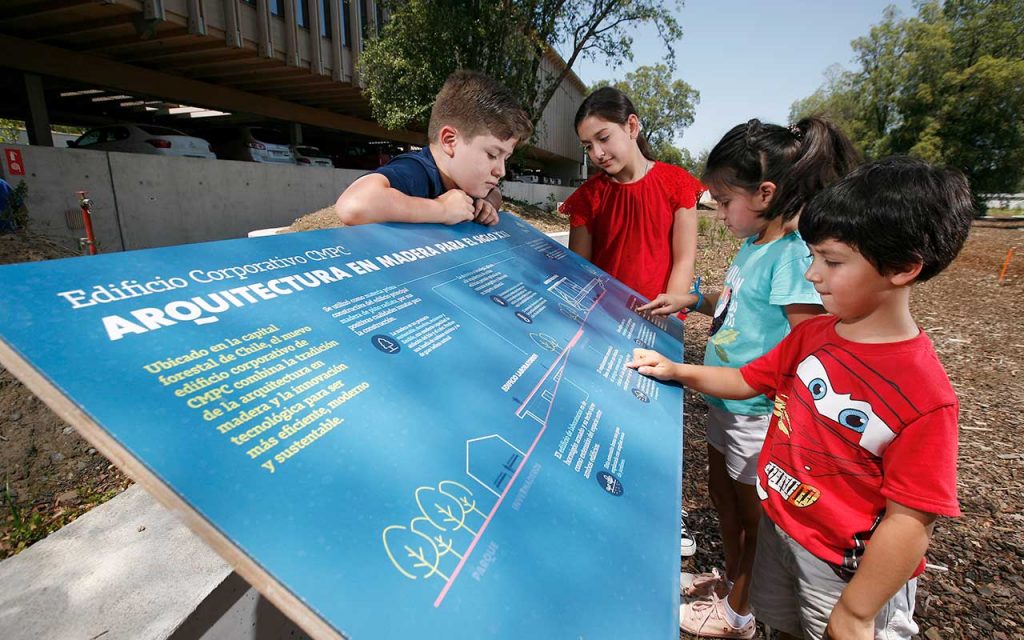
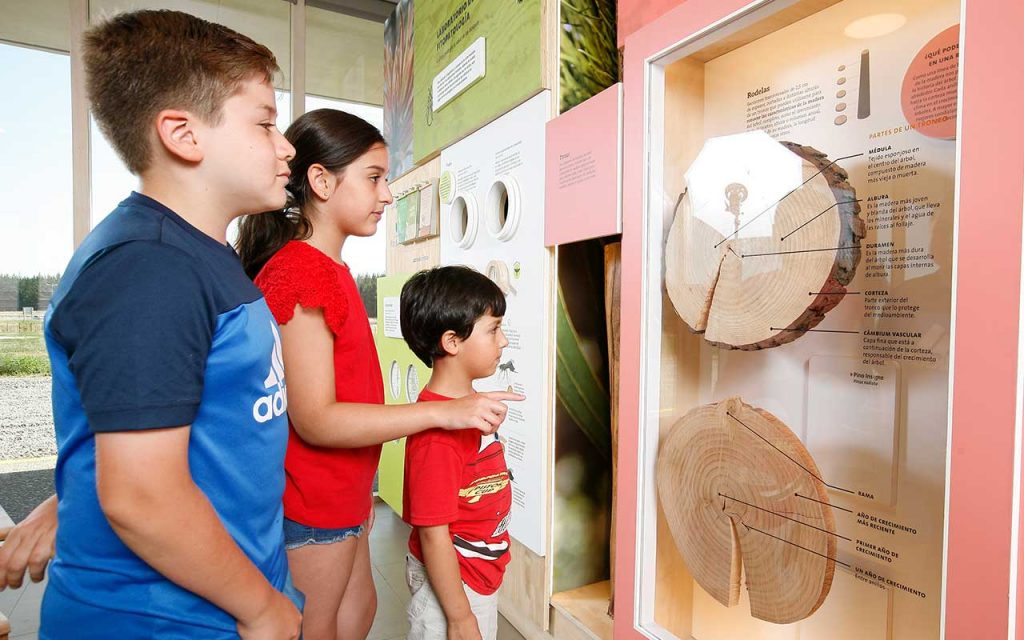
We developed from mock-ups to scale models and 1:1 materiality, of all the supports included in the system (both concrete and digital). Given the heterogeneity of users who would visit the experience, testing with users of different ages was important, due to their morphological (height, reach, etc.) and socio-cognitive (age, cultural context, development, etc.) attributes.

5. Project implementation
The solution was launched as a preliminary version during the official inauguration of the CMPC building in Los Angeles. This instance made it possible to test and measure the performance of the solution in real conditions of use. With the information gathered, it was possible to optimize the solution and thus to promote (i) a better didactic experience for all the actors involved, and (ii) plan the spreading and possible scaling up of the experience in other CMPC instances.
SOLUTION
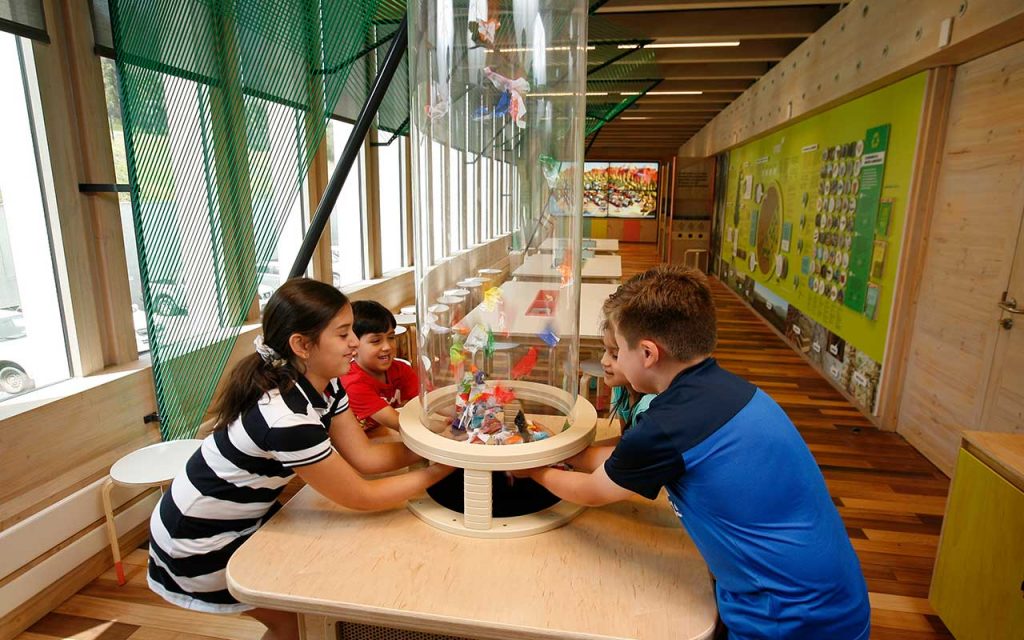
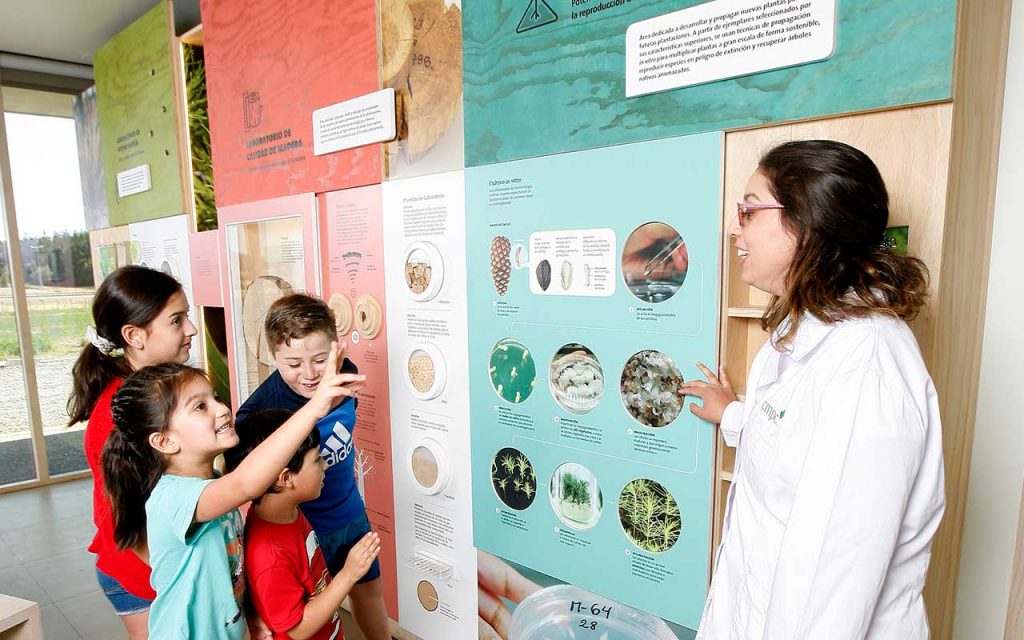
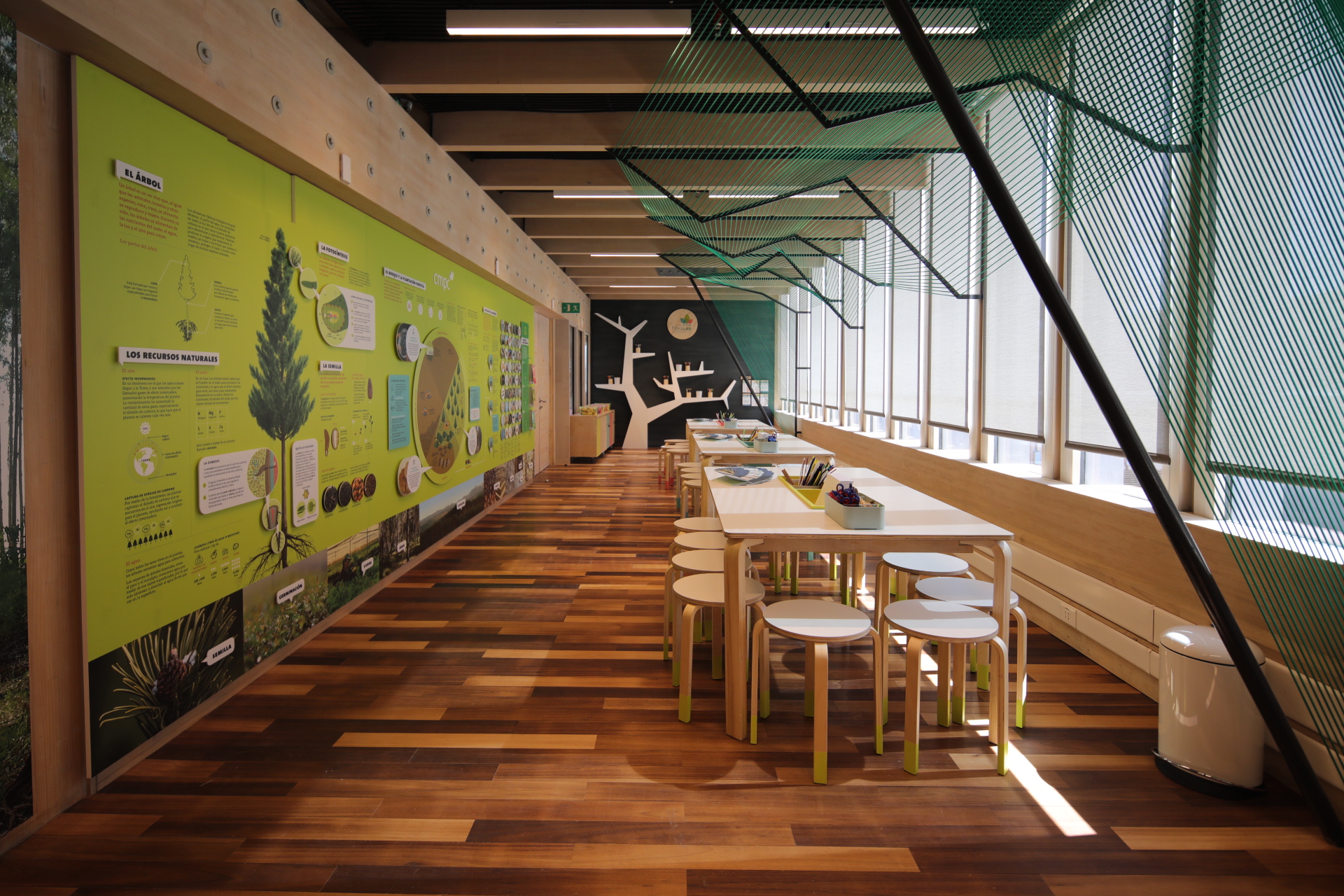
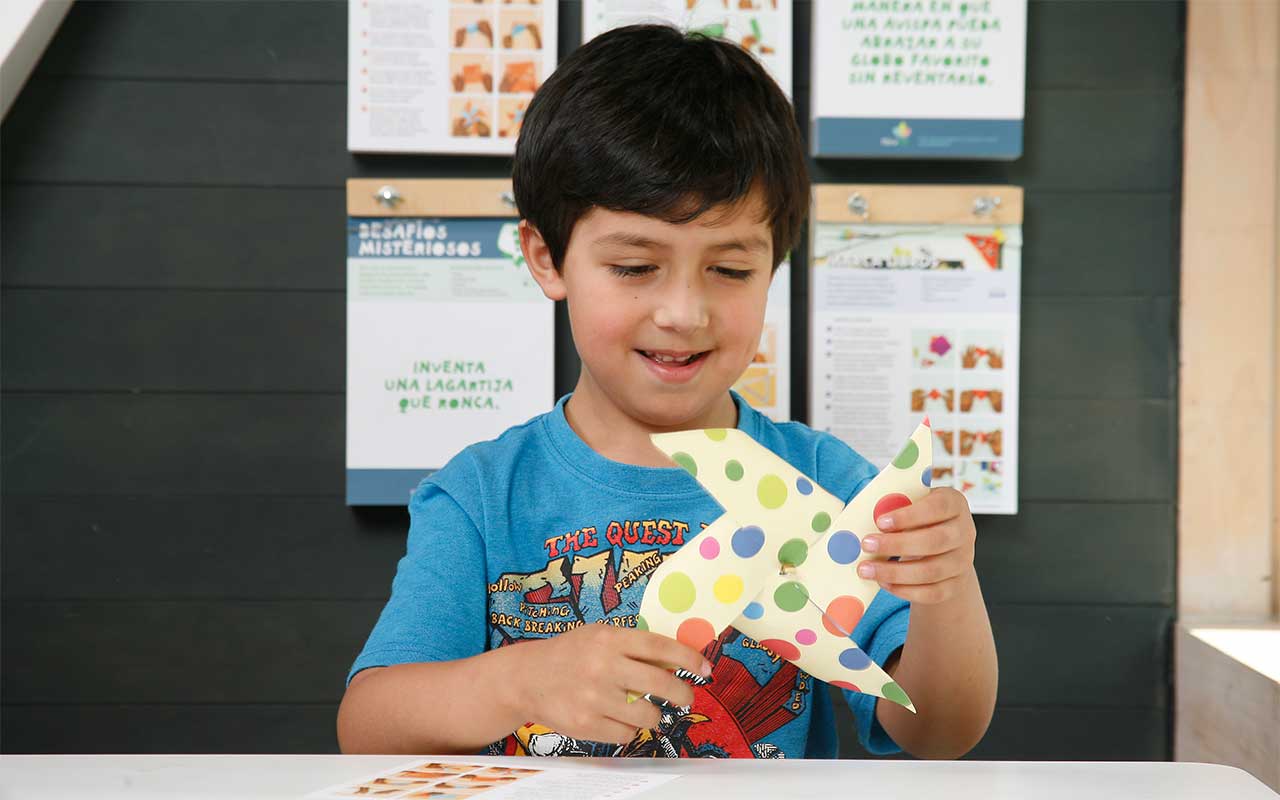
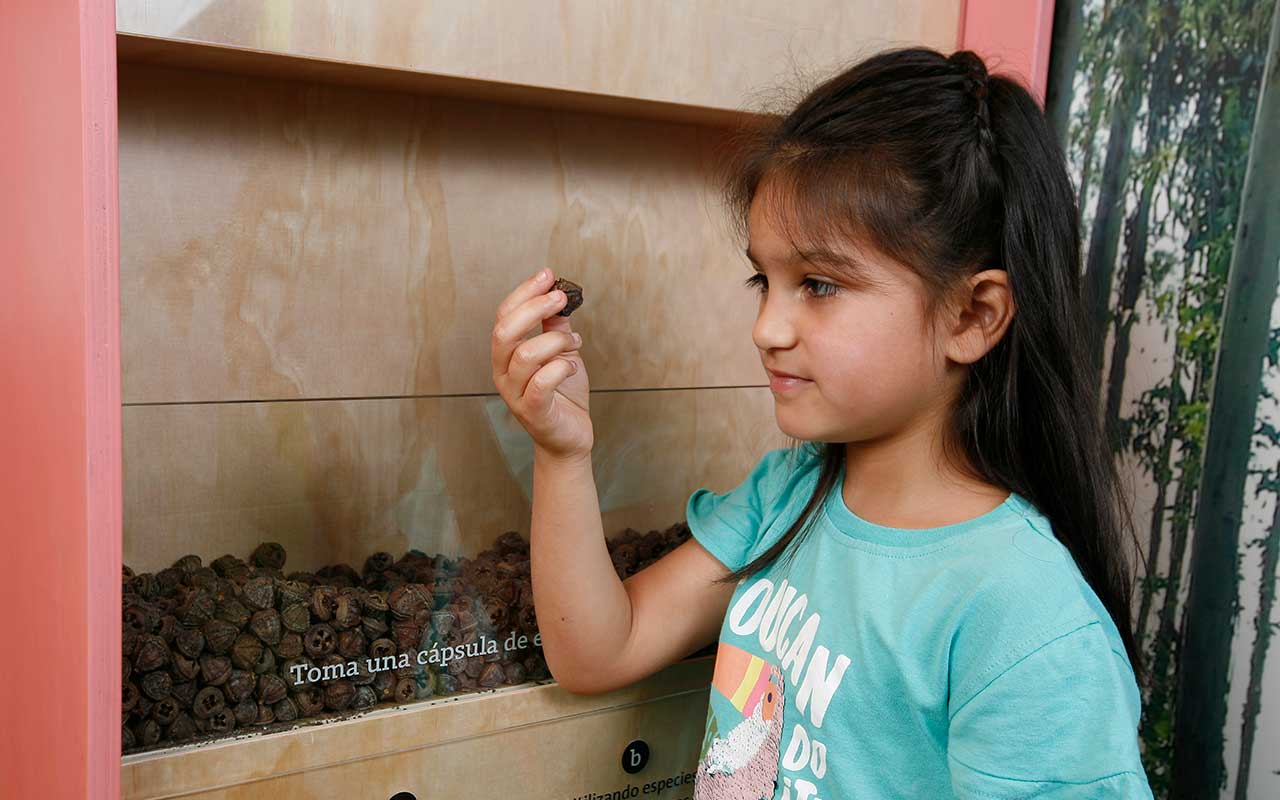
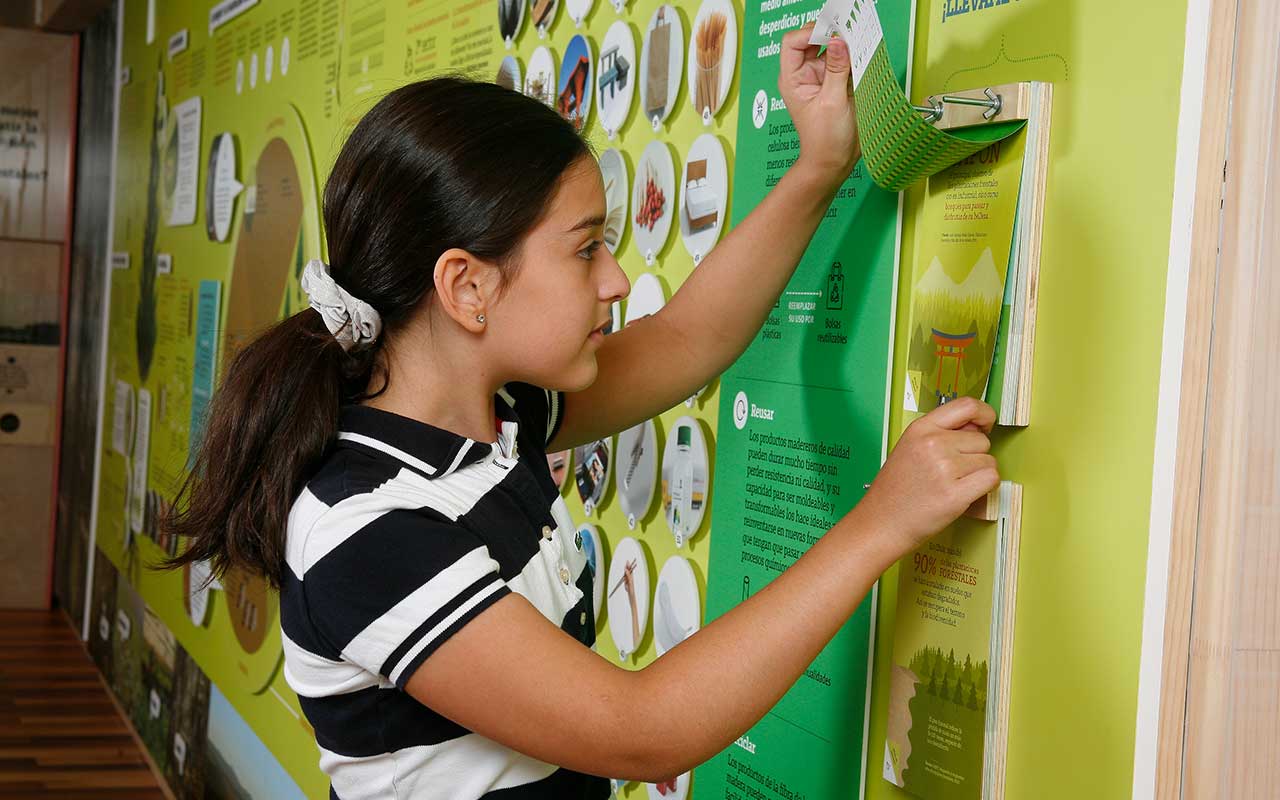
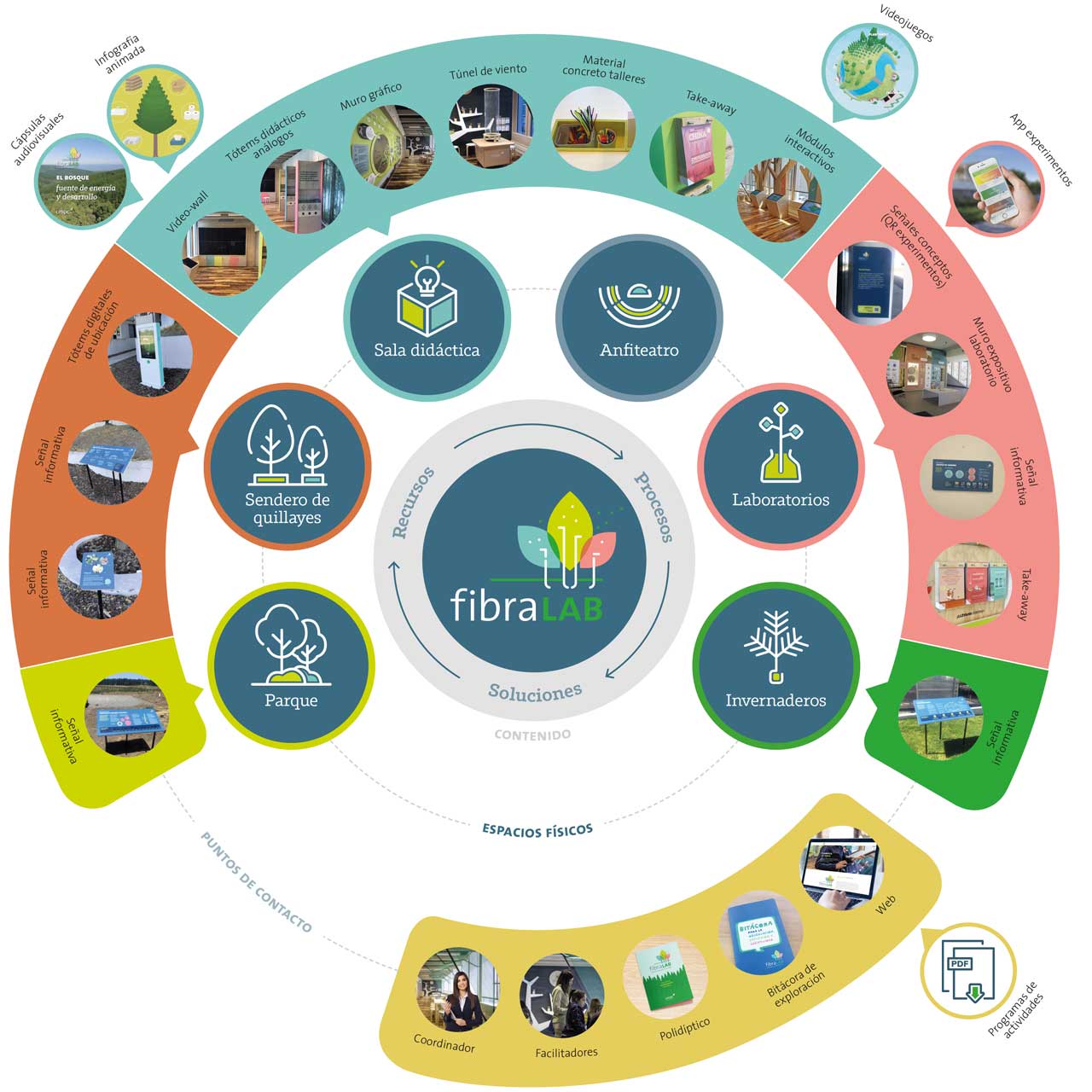
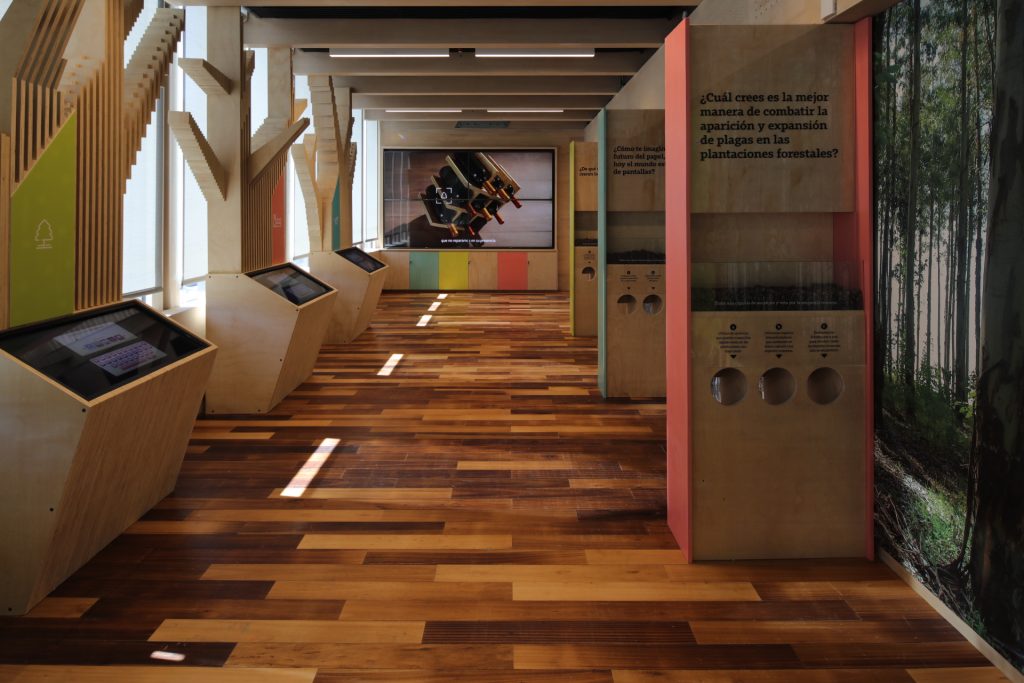
The final solution is a didactic experience that includes interactive spaces, activities, tours and games in which visitors approach the knowledge of the forestry industry and the environment in an interactive and sensory way through multiple media, formats, spaces and practical activities.
The final solution is constituted as a didactic experience of activities, tours and games in which visitors get closer to the knowledge of the forestry industry and the environment in an interactive and sensory way.”
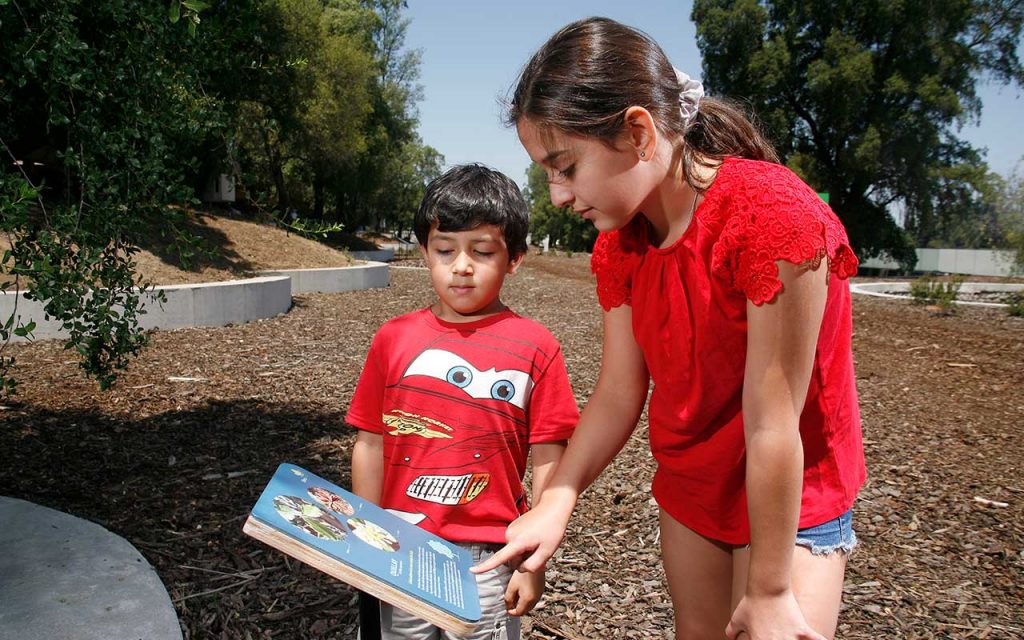
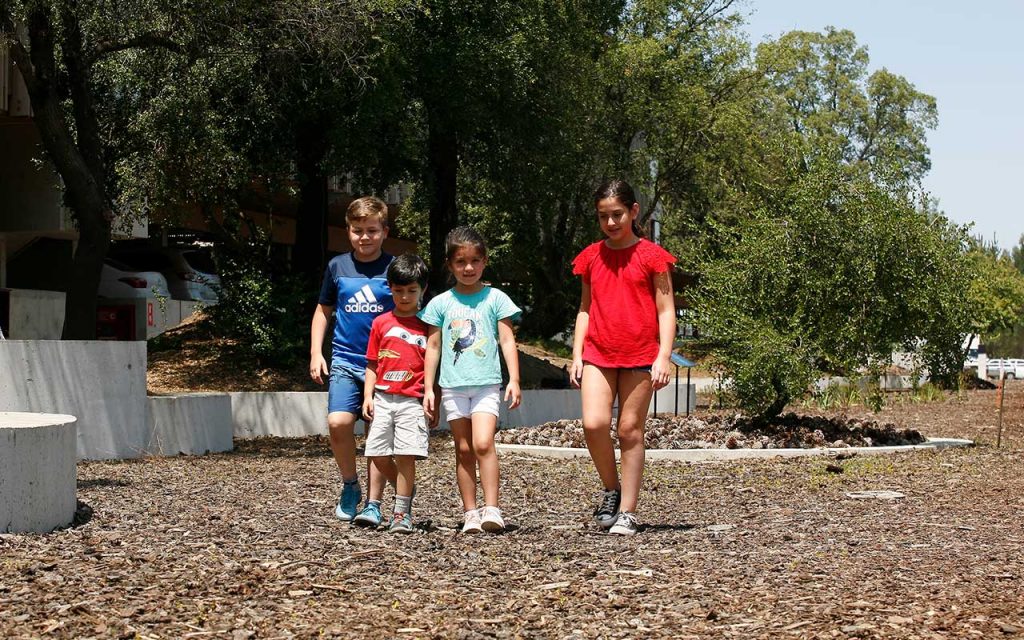
The tours include visits to different areas of the CMPC facilities in Los Angeles: interior spaces such as the didactic roomwhere, through interactive activities, visitors can learn about the various areas of the forestry industry; the modern laboratories where scientists apply cutting-edge technology to improve and protect the trees; and outdoor areas such as greenhouseswhere the sprouts are planted to grow healthy and strong; and the quillayes trailesplanade with original native species from the old access to the city of Los Angeles, and the parkwhere native tree species are in the process of growing.



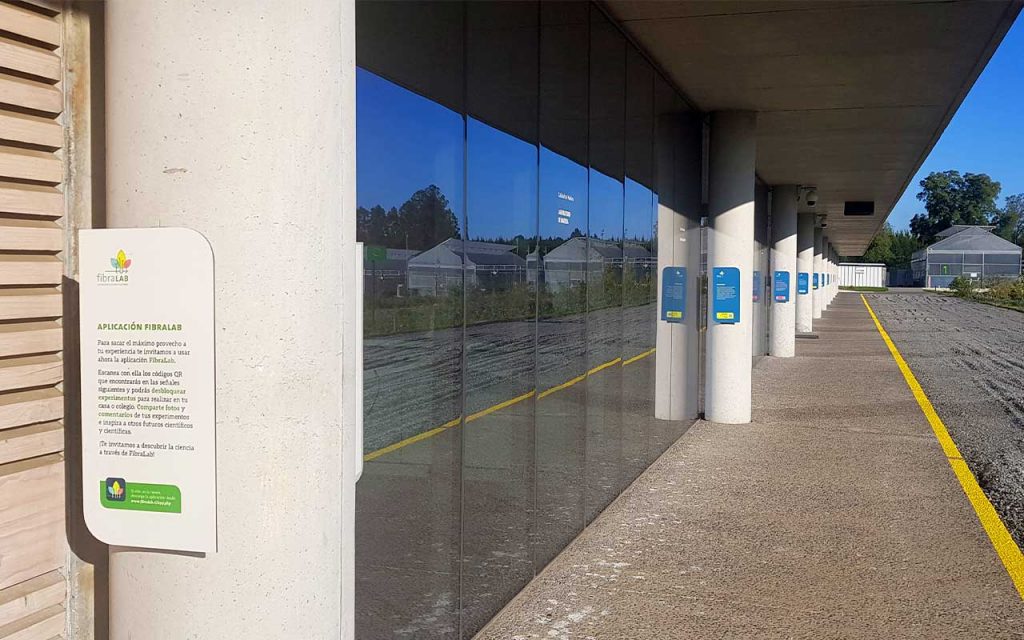
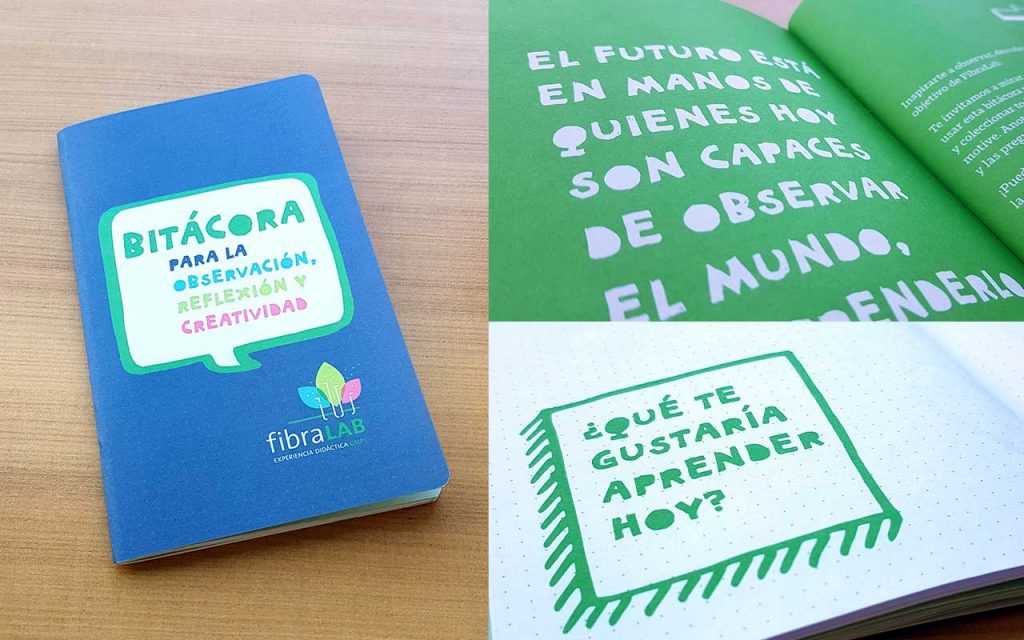
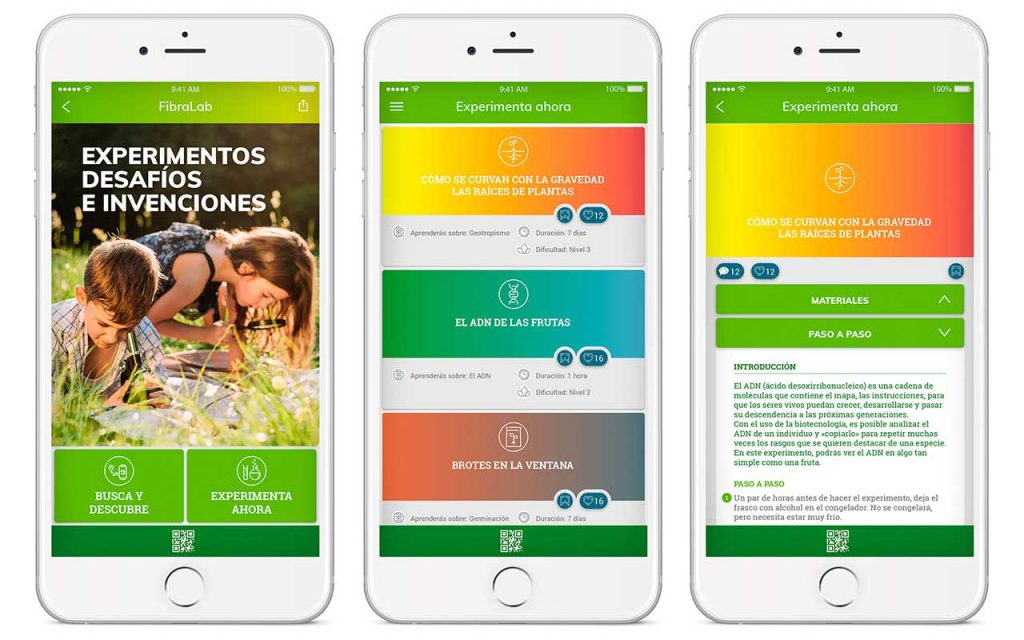
The experience was also extended to encourage autonomy, observation and personal reflection by the participants. The elements developed for this were:
- Observation journalA gift notebook given at the end of the experience, dedicated to recording observation, reflection and creativity, it is an invitation to be inspired, observe, discover and create (main objectives of the FibraLab experience).
- FibraLab app: Contains experiments to perform at home and others that are unlocked during the visit to the building, with the possibility of sharing comments or results.
- Programs of activitiesSuggested activities related to the contents of the experience for teachers to carry out in the classroom with their students.
LESSONS LEARNED AND NEXT STEPS
The solution was successfully launched, offering valuable insights for refinement and potential expansion in other CMPC contexts, promoting an enriching educational experience. It was crucial to adapt the experience to the diversity of users and to ensure that the educational guides were effective in motivating and engaging students and teachers.